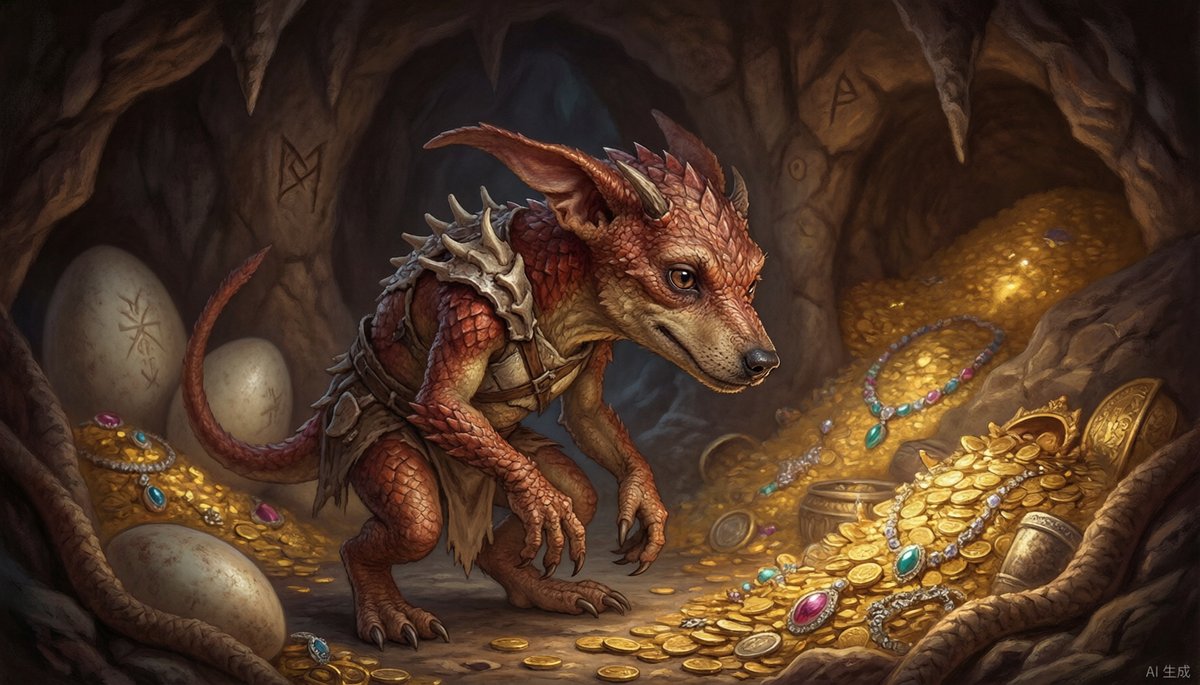
A kobold's name is not their own. It never was. From the moment a kobold hatchling emerges from its egg, it belongs to the dragon that rules the warren, and every aspect of kobold identity -- including names -- flows downward from that draconic authority. To understand kobold names, you must first understand kobold servitude. These small, reptilian humanoids do not name themselves because they do not belong to themselves. They belong to the dragon, and the dragon's gift of a name is the first chain in a lifetime of devotion.
This stands in stark contrast to how most humanoid races approach naming. Elves choose melodic names reflecting starlight and nature. Dwarves inherit clan names carved into stone tablets. Orcs earn their names through blood and battle. But kobolds? Kobolds receive their names the way a vassal receives a title -- from above, from the one who holds power over them, as both a gift and a reminder of their place in the world's most rigid hierarchy.
The Dragon-Given Name System
When a kobold egg hatches, the hatchling is brought before the tribe's dragon master (or, in the case of tribes without a direct dragon relationship, before the chieftain who speaks for the dragon). The dragon examines the hatchling -- noting its size, its coloring, the shape of its claws, the brightness of its eyes -- and pronounces a name. This name is not random. It is a functional label that encodes the kobold's expected role within the pack.
A kobold with large, powerful hands might be named Drok (meaning "dig" in Draconic pidgin), marking it as a future tunnel-digger. A kobold with keen eyes and nimble fingers might be named Slik (meaning "trap" or "snare"), designating it as a trap-setter. A kobold with a loud, distinctive voice might be named Yip (meaning "call" or "warn"), earmarking it as a sentry or messenger. The dragon sees utility first, identity second.
Diggers: Drok, Burak, Grub, Delv, Spadd
Trap-setters: Slik, Snar, Trip, Wirek, Hook
Messengers: Yip, Skri, Call, Pip, Echo
Guards: Wach, Bord, Stand, Pik, Shield
Cook-keepers: Broth, Salt, Kettl, Roast, Simm
Dragon-tenders: Pol, Scraib, Ash, Ember, Gleam
The name is spoken once, in Draconic, and it is never repeated casually. To speak a kobold's name is to invoke the dragon's authority over that kobold. Other kobolds will use the name respectfully, but always preceded by the pack identifier -- never alone, never casually. The name belongs to the dragon as much as it belongs to the kobold.
Pack First, Name Second: The Identity Hierarchy
In kobold culture, your pack identity always comes before your personal name. A kobold is not "Slik" -- they are "Emberclaw Slik," "Frostbite Slik," or "Venomscale Slik." The pack name identifies which dragon's authority you serve under, and the personal name identifies your function within that pack. This order of introduction is not optional. A kobold who introduces themselves by personal name first is either a very confused kobold or one making a dangerous statement about their independence.
Pack names are compound descriptors that reference the dragon master's color, domain, or most feared quality. They serve as both identification and warning -- when a kobold says "Emberclaw Slik," they are also saying "I serve the red dragon whose claws burn like embers, and you should be afraid." The pack name carries the dragon's reputation, and every kobold in the pack is responsible for upholding it.
Red Dragon packs: Emberclaw, Ashscale, Flamefang, Cinderbite, Burningmaw
Blue Dragon packs: Stormscale, Sandslither, Thundervolt, Dunesnap, Crackleshine
Green Dragon packs: Venomscale, Mistwalker, Thorncoil, Poisonleaf, Shadowvine
White Dragon packs: Frostbite, Iceshard, Shiverclaw, Snowmaw, Coldgrip
Black Dragon packs: Murkmire, Sludgetooth, Corroscale, Swampfang, Darkpool
Brass Dragon packs: Sunscorch, Sandsinger, Heatwave, Dustrunner, Blazetail
Copper Dragon packs: Verdantscale, Mossback, Patinawing, Greenveil, Earthenclaw
When kobold packs merge or split, the pack name changes to reflect the new power structure. A kobold might go from "Emberclaw Droop" to "Greater-Emberclaw Droop" if their pack absorbs a smaller one. Conversely, a splinter pack might adopt a diminished version of the original name: "Emberclaw-Small Droop" to indicate they broke away from the main group. These modifications are always approved by the dragon master, since the pack name is an extension of the dragon's own identity.