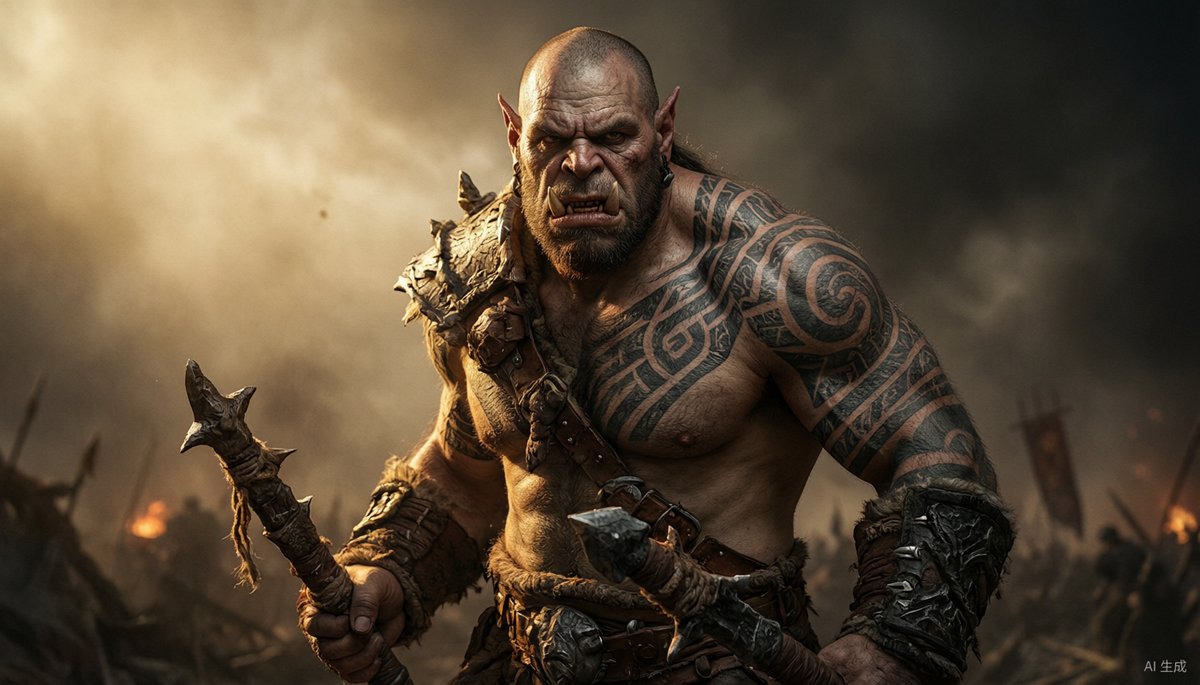
Powerful orc warlord with tribal markings and crude weapons, fierce expression

Orc Name Generator

Generate brutal orc names for D&D 5e — guttural warrior names with tribal honor and strength epithets

Generate Orc Names for Your Fantasy RPG Adventures

How Orcish Naming Actually Works

An orc's name is not given -- it is taken. In tribal orc culture, you are born with a soft name whispered by your mother, a placeholder used only until you prove yourself worthy of a true name. That proof comes through blood: your first kill, your greatest feat of strength, or your survival against impossible odds. When you drag the corpse of a cave bear back to camp, you are no longer "Puug" -- you are "Grom the Bear-Ripper," and that name will be spoken with fear by your enemies for the rest of your days.

The Three Stages of an Orc's Name

Every orc warrior's identity evolves through three distinct stages, each marking a transformation in status and power:

  • Birth Name (Soft Name): Given by the mother, used only in childhood. These names are simple, often repetitive sounds: Puug, Mogg, Nukk, Grik. An orc who still uses their birth name as an adult is considered unproven -- a coward or a weakling who never earned their true place in the tribe.
  • True Name (Battle Name): Earned through first kill or great deed of strength. This name reflects the nature of the feat: killing a bear might earn "Grom" (thunder/strike), while defeating a rival chieftain could earn "Krag" (rock/crag). The true name replaces the birth name entirely -- using both is considered childish.
  • Clan Name (Heritage Name): A compound word describing the tribe's most feared characteristic or greatest deed. Clan names like Skullcrusher, Bloodfist, Doomhammer, or Bone-Breaker tell other tribes what this clan does best. You inherit your clan name, but the clan itself may rename after a legendary victory -- a tribe that defeats a dragon might become "Dragonslayer" overnight.

Earned Epithets: The Warrior's Resume

Powerful orcs accumulate epithets throughout their lives, each one a record of a specific deed of violence or survival. These titles are not decorative -- they are warnings. When an orc introduces themselves as "Grom Skull-Crusher, Maneater, the Unstoppable," they are not merely stating their name. They are listing every foe who fell before them and daring you to be next.

Common epithet categories include:

  • Combat Deeds: "the Bone-Render," "Skull-Smasher," "She-Who-Broke-the-Gate," "Wraith-Scalper"
  • Survival Feats: "the Scarred," "Death-Defier," "Pit-Survivor," "the Unbroken"
  • Leadership Roles: "War-Chief," "the Dominator," "Horde-Caller," "Clan-Binder"
  • Feared Characteristics: "Maneater," "the Feared," "Blood-Drinker," "the Cruel"

An epithet can be lost if an orc shows cowardice or fails in battle. A warrior who flees from a fight might find their "the Brave" epithet stripped away, replaced with mocking titles by their enemies.

Choose Your Tribal Tradition

Not all orc tribes speak the same tongue. The phonetic patterns of your name reveal where you were raised, which war-camp trained you, and what totem animal your tribe honors. Our generator lets you choose from three major tribal traditions, each with distinct naming conventions:

Standard Orc Tribes (The Wastes)

The most common orc naming pattern: harsh, guttural, and brutally short. Names from the wastes use hard consonants (K, G, R, B, D, T) and short syllables that sound like an axe striking stone. These are the orcs who raid caravans and besiege frontier towns.

Male: Grom, Krag, Thok, Druk, Gruk, Brak, Krog, Thrum
Female: Groma, Shagga, Urgra, Mogra, Bruga, Kraga
Clan Names: Skullcrusher, Bloodfist, Doomhammer, Bone-Breaker, Warfang

Mountain Orcs (The Stone Holds)

Mountain orcs -- "Stone Folk" in their own tongue -- are orcs who settled in mountain strongholds and developed a more structured society. Their names retain the harsh orcish foundation but incorporate longer vowel sounds and more complex syllable structures, reflecting their organized culture and mastery of smithing. A mountain orc name sounds like it was forged on an anvil.

Male: Tharmoz, Borghak, Gat, Mogh, Ram, Ardhal, Morik
Female: Borga, Gulathi, Magh, Urmula, Sharamp
Clan Names: the Stone-Bear Clan, the Iron-Haze Stronghold, the Steel-Breaker Hold

Orog (The Deep Mountains)

Orogs are larger, more intelligent orcs who inhabit the deepest mountain caverns. Their names retain the harsh orcish sounds but incorporate additional syllables reflecting their greater cunning and longer lifespans. An Orog warlord's name sounds like a threat whispered in the dark.

Male: Thargor, Bruglak, Gruumshar, Drukthal, Kroganna
Female: Thargra, Bruglith, Gruumsha, Drukthala
War-band Names: the Crimson Tusk, the Mind-Cleavers, the War-Thinkers

How Clan Names Reflect Tribal Identity

An orc clan's name is not chosen -- it is earned through battle and fear. When other tribes speak your clan name, it should sound like a curse. When humans speak it, it should sound like a death sentence. Clan names are compound words that describe what your tribe does best, what you fear most, or what you have conquered.

Clan Name Categories

Material + Body Part: These names describe the clan's preferred weapons or armor, or a physical characteristic they are known for. A clan that fights with iron fists and never retreats might be called "Ironfist." A clan whose warriors are known for their massive, tusked jaws might be "Steel-Tusk."

  • Blackrock, Ironjaw, Steel-Tusk, Bone-Crusher, Stone-Fist

Violence + Object: These names describe the clan's signature combat technique or the fate they inflict on their enemies. A clan that always breaks their enemies' weapons before killing them might be "Weapon-Breaker." A clan that collects skulls as trophies would be "Skull-Collector."

  • Bloodfist, Skull-Smasher, Warfang, Deathgrip, Bonesnapper

Fear + Action: These names describe the clan's reputation or the emotional state they inflict on their enemies. A clan that attacks at night and leaves no survivors might be "Night-Hunter." A clan that burns everything in their path would be "Flame-Walker."

  • Dread-Rider, Terror-Bringer, Night-Hunter, Storm-Raider, Flame-Walker

When Clans Rename Themselves

A clan name can change overnight if the tribe accomplishes something legendary. The Skullcrusher clan might defeat a young red dragon and immediately rename themselves "Dragonslayer" to mark the achievement. A tribe that survives a demon incursion might become "Demon-Bane." These name changes are not vanity -- they are warnings to other tribes and a record of the clan's rising power.

Conversely, a clan that suffers a humiliating defeat might have their name mocked by enemies. The mighty Warfang clan, after being routed by a small human militia, might find themselves called "Milkfang" by rival tribes until they earn back their original name through another great deed.

The Totem Animal: Your Name's Spiritual Guardian

Every orc tribe honors a totem animal -- a spiritual guardian whose strength, cunning, or ferocity the tribe aspires to embody. Your totem shapes your clan name, your personal epithets, and even the sounds of your true name. When you introduce yourself, you are also invoking your totem's power.

Common Totem Animals

The Wolf: Tribes that honor the wolf are known for their pack tactics, loyalty, and hunting prowess. Wolf-totem clans often have names like "Wolf-Fang," "Pack-Rider," or "Moon-Howler." Their warriors fight in coordinated groups and never abandon their wounded.

The Bear: Bear-totem tribes are known for their raw strength, endurance, and ferocity when provoked. Bear clans use names like "Bear-Ripper," "Grizzly-Maw," or "Cave-Breaker." Their warriors are often the largest in the region and fight with devastating single blows.

The Boar: Boar-totem tribes are known for their aggression, stubbornness, and refusal to retreat. Boar clans use names like "Tusk-Charger," "Bristle-Back," or "Blood-Boar." Their warriors are often the first into battle and the last to leave.

The Spider: Spider-totem tribes are known for their cunning, patience, and use of poison. Spider clans use names like "Web-Weaver," "Venom-Fang," or "Shadow-Spinner." Their warriors prefer ambush tactics and often serve as scouts or assassins.

How Totems Shape Personal Names

Your personal name often reflects your totem animal, either directly or through metaphor. A wolf-totem orc might be named "Gruk the Pack-Leader" or "Shagga Wolf-Sister." A bear-totem orc might be "Krag Bear-Claw" or "Groma the Unstoppable." These names invoke the totem's power and remind others of the spiritual force backing the warrior.

Some orcs earn a totem name after a personal encounter with the animal. An orc who survives a fight with a cave bear might earn the name "Bear-Ripper" regardless of their clan's totem. An orc who tracks a wolf pack for a month might earn "Wolf-Brother." These names are considered especially powerful because they are earned through direct communion with the totem spirit.

Half-Orcs: Bridging Two Worlds Through Naming

Half-orcs carry the weight of two cultures, and their names must navigate the tension between human softness and orcish brutality. A half-orc raised among humans will have a human name but may earn an orc epithet after their first fight. A half-orc raised among orcs will follow the traditional naming system but may never be fully accepted by the tribe, no matter how many enemies they slay.

Bridge Names: The Best of Both Worlds

Some half-orcs adopt "bridge names" that blend human and orc elements -- a human first name with an orc epithet, or an orc first name with a human surname. These names signal that the half-orc belongs to neither world fully but carries pieces of both.

Human-raised: Marcus Ironjaw, Sara Bloodstone, Gregor the Scarred, Maelis Doomborn
Orc-raised: Drogan, Mogra, Thokk, Urska, Krev the Half-Blood
Bridge names: Torven Bloodvow, Serai Ironvow, Kethrin Grimscar, Vala Warborn

Earning Acceptance Through Names

A half-orc who wishes to be accepted by an orc tribe must earn a more brutal name than full-blooded orcs. Where an orc might earn "Grom the Bear-Ripper" for killing a single bear, a half-orc might need to kill two bears or defeat an orc warrior in single combat to earn the same respect. This pressure produces half-orcs with epithets like "Twice-the-Bear-Ripper," "Orc-Bane," or "the Over-Prover" -- names that reflect their constant need to demonstrate their worth.

Conversely, a half-orc who lives among humans may downplay their orc heritage, using a simple human name and hiding their tusks. When they finally embrace their orc side, the change is marked by adopting an orc epithet: "Marcus" becomes "Marcus the Unbroken" after surviving a battle that would have killed a full human.

Complete Orc Character Examples

Here are four complete orc characters with names, clan affiliations, earned epithets, and backstories that demonstrate how the naming system works in practice:

Grom Skull-Crusher, the Bear-Ripper
Tribe: Skull-Crusher Clan (wastes orc, wolf totem)
Birth Name: Puug (discarded after first kill)
True Name: Grom (earned by killing a cave bear with bare hands)
Clan Name: Skull-Crusher (inherited; the clan is known for ending fights with a single overhead blow)
Epithet: the Bear-Ripper (earned after dragging a cave bear corpse back to camp)
Backstory: Grom was born with the soft name Puug, a placeholder used only until he proved himself. At age 12, he killed a cave bear that threatened the camp, earning his true name "Grom" (thunder/strike) and the epithet "Bear-Ripper." He now leads the tribe's hunting parties and is next in line to become war-chief.
Shagga Iron-Tusk, She-Who-Broke-the-Gate
Tribe: Iron-Tusk Clan (mountain orc, boar totem)
Birth Name: Mog (discarded after first raid)
True Name: Shagga (earned by breaking through a fortified gate during a raid)
Clan Name: Iron-Tusk (inherited; the clan wears iron tusks as jewelry from defeated enemies)
Epithet: She-Who-Broke-the-Gate (earned during a raid on a human fortress)
Backstory: Shagga was born Mog, a soft name she despised. During her first raid at age 14, she single-handedly broke through a fortified gate using a battering ram, earning her true name "Shagga" (tear/rip) and her epithet. She now serves as the tribe's siege specialist and is feared by human settlers for her ability to breach any defense.
Tharmoz the Stone-Bear, Forge-Master of Ardhal
Tribe: Stone-Bear Clan (Mountain orc, stone hold)
Birth Name: Tharmoz (Mountain orc names are not discarded; they are refined through smithing)
True Name: Tharmoz (retained; mountain orcs believe the birth name contains the soul's essence)
Clan Name: the Stone-Bear (inherited; the clan are master smiths who work with mountain stone)
Epithet: Forge-Master of Ardhal (earned after forging a legendary weapon)
Backstory: Unlike wastes orcs, mountain orcs do not discard their birth names. Tharmoz was born with his name and spent 20 years refining it through mastery of the forge. After crafting the legendary axe "Ardhal" (a name meaning "mountain's tooth"), he earned the epithet "Forge-Master of Ardhal." He now trains young mountain orcs in both smithing and combat, believing that a well-forged weapon is as deadly as a well-trained warrior.
Marcus Ironvow, the Over-Prover
Race: Half-Orc (human mother, orc father)
Birth Name: Marcus (given by human mother)
True Name: Marcus (retained; half-orcs often keep human names)
Clan Name: None (half-orcs are not born into clans)
Epithet: the Over-Prover (earned after defeating three orc warriors in single combat to prove his worth)
Backstory: Marcus was raised by his human mother in a frontier town, never fully accepted by either race. At age 16, he sought out his father's orc tribe and was challenged to prove his worth. He defeated three warriors in single combat, earning the epithet "the Over-Prover" -- a name that acknowledges both his strength and his constant need to demonstrate it. He now serves as a bridge between the orc tribes and human settlements, negotiating peace through fear and respect.

Using Orc Names in Your Campaign

For Players: Building Your Orc's Identity

When creating an orc or half-orc character, start with the naming system and build your backstory from there. Ask yourself:

  • What was your birth name? This is the name your mother gave you, the name you used before you proved yourself. It might be a source of shame or a reminder of where you came from.
  • What deed earned your true name? Every orc's true name is a record of violence or survival. What did you do to earn it? Did you kill a monster, defeat a rival, or survive an impossible situation?
  • What is your clan name? If you belong to a tribe, your clan name is your heritage. What is the tribe known for? What do other races fear when they hear your clan name?
  • What epithets have you earned? As you adventure, you will accumulate epithets. Each one should be a specific deed that other characters can reference. "Grom the Bear-Ripper" tells a story; "Grom the Strong" does not.

For DMs: Populating the Wastes with Tribes

When creating an orc tribe, start with the clan name and work backward. The clan name tells you what the tribe is known for, which shapes their totem animal, their preferred combat tactics, and their reputation among neighboring races.

Step 1: Choose the clan name. What is this tribe feared for? Are they raiders (Bloodfist), hunters (Bear-Ripper), siege specialists (Gate-Breaker), or smiths (Iron-Forger)?

Step 2: Choose the totem animal. What spiritual guardian does the tribe honor? The totem should match the clan's reputation: wolf for hunters, bear for warriors, boar for raiders, spider for scouts.

Step 3: Generate the war-chief's name. Use the true name + clan name + epithet pattern. The war-chief's name should be the most feared in the region.

Step 4: Generate 3-5 lieutenant names. Use batch mode to create the war-chief's inner circle. All names should follow the same tribal phonetic patterns.

Step 5: Generate 10-20 rank-and-file warrior names. Use batch mode with a higher count. These orcs have simpler names -- true name + clan name, no epithets yet.

Names as Plot Devices

Orc names can drive your campaign's plot in several ways:

  • A clan seeking to rename themselves: The Skullcrusher clan wants to defeat a dragon and become "Dragonslayer." The party can help them achieve this goal or stop them from gaining that much power.
  • A half-orc proving their worth: Marcus the Over-Prover needs to complete a series of increasingly dangerous challenges to earn full acceptance in his father's tribe. The party can assist or compete against him.
  • A lost epithet: Grom the Bear-Ripper fled from a battle and lost his epithet. He now seeks a way to reclaim it, even if it means undertaking a suicidal quest. The party can help him redeem himself or exploit his desperation.
  • A clan name curse: The Warfang clan was mocked as "Milkfang" after a humiliating defeat. They now seek revenge against the tribe that mocked them, and the party is caught in the middle.

Related Generators

Frequently Asked Questions

What makes an orc name sound authentic?

Authentic orc names use hard consonants (K, G, R, B, D, T), guttural combinations (Gr-, Kr-, Br-, Dr-), short syllables (1-2), and harsh vowels (U, O, A). They sound brutal and primal, reflecting a warrior culture where names are earned through combat and survival rather than given at birth.

Can I use these orc names for my D&D campaign?

Yes. All generated names are original and free to use in your tabletop RPG campaigns, novels, games, or any creative project. Our names follow established fantasy RPG orc naming conventions. Each name comes with an etymology breakdown showing its linguistic roots.

What is the difference between male and female orc names?

Male orc names are shorter and more brutal (Grom, Krag, Thok, Druk), typically 1-2 syllables with hard consonant endings. Female orc names are slightly longer with more vowel sounds but still harsh (Groma, Shagga, Urgra, Mogra), often ending in -a or -ga while maintaining the guttural quality.

How do orc clan names work?

Orc clan names are compound words describing the clan's most feared characteristic or greatest deed: Blackrock, Bloodfist, Bonesnapper, Skullcrusher, Warfang. These names are earned through battle and change when the clan accomplishes something notable. A clan that defeats a dragon might rename itself Dragonslayer.

What are orc epithets?

Orc epithets are warrior titles earned through combat achievements: "the Destroyer," "Skull-Crusher," "Maneater," "Bone-Breaker," "the Unstoppable." An orc earns their epithet after their first great kill or deed of strength. These titles replace childhood "soft names" given by their mothers.

How do half-orcs choose names?

Half-orcs may use either their orc parent's naming tradition or adopt human-style names depending on where they were raised. Those raised among orcs earn brutal names through combat. Those raised among humans often have simpler names but may add an orc epithet: "Marcus the Scarred" or "Sara Ironjaw."

How do I pronounce orc names?

Orc pronunciation emphasizes hard consonants and guttural sounds: "Gr" is rolled hard as in "Grom," "K" is sharp and percussive as in "Krag," "Th" is unvoiced as in "thin" not "this." Vowels are short and clipped. Use our speaker icon to hear any name pronounced aloud with the correct orc cadence.

Why do orc names sound so harsh?

Orc names reflect their culture of combat and survival. In orc society, a name must sound intimidating and convey strength. The harsh consonants (K, G, R) and guttural combinations (Gr-, Kr-, Br-) mimic the sounds of battle -- clashing weapons, roaring warriors, and breaking bones. Soft sounds are considered weak in orc culture.