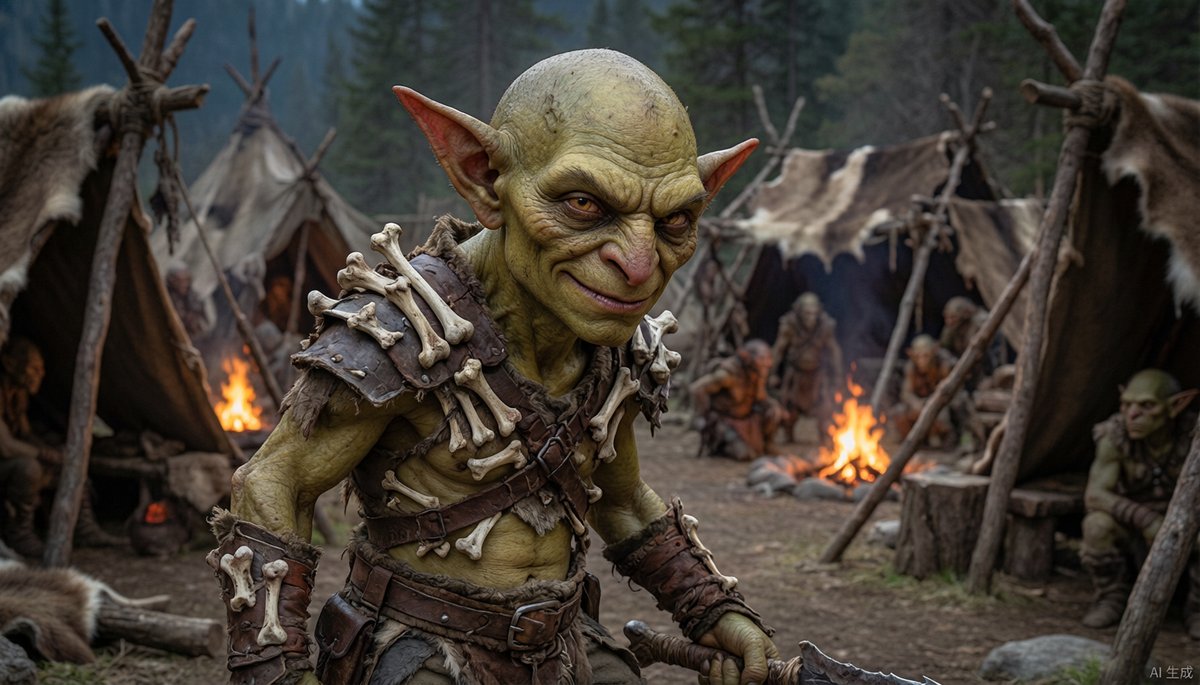
Survival of the Cunning: How Goblin Names Reflect Tribal Hierarchy
In the brutal, short-lived world of goblin-kind, a name is not a gift from parents -- it is a weapon, a resume, and a warning all rolled into one guttural syllable. Unlike the elegant naming traditions of elves or the honor-bound clan names of dwarves, goblin names are earned through acts of cunning, treachery, and survival. Every name tells the story of something a goblin did, not who they were born to.
Understanding goblin naming is essential for any player creating a goblin character, any DM populating a goblin warren, and any writer trying to capture the feel of these devious creatures. The naming system reveals the entire social structure of goblin tribes -- who leads, who serves, who has proven themselves, and who is one failed scheme away being cast out into the dark.
The Goblin Naming Hierarchy: Length Equals Power
The most fundamental rule of goblin naming is deceptively simple: the longer your name, the higher your rank. This single principle governs every aspect of goblin identity and social climbing.
| Rank | Name Structure | Examples | How Earned |
|---|---|---|---|
| Grunt / Slave | Single short syllable | Grik, Nub, Skab, Plik, Drip | Default name at birth; no deeds yet |
| Warrior | Two syllables or short compound | Griknak, Snagtooth, Kribble, Raskit | First successful raid or kill |
| Veteran / Lieutenant | Name + epithet | Griknak Bonepicker, Raskit the Sly | Multiple successful schemes; leads small groups |
| Boss / Chieftain | Full compound name with title | Grishnak Skullcrusher, Zog the Unburnt | Overthrew or outsmarted previous boss |
| Legendary Boss | Multi-part name with fear-title | Grishnak Skullcrusher, Bane of the Northern Farms | Feared across multiple regions |
This hierarchy is not merely symbolic. When a group of goblins encounters outsiders, the one who speaks first is invariably the one with the longest name. Other goblins instinctively defer to the longer-named individual, even if a shorter-named goblin might be physically stronger. The name is the authority.
How Goblins Earn New Names: The Deed-Based System
Goblin names are not static. They change as goblins accomplish deeds -- or fail spectacularly. The naming system functions as a living record of a goblin's career, with each new name layer commemorating a specific act of cunning, violence, or survival.
The Three Paths to a New Name
Path of Cunning: The most respected path. A goblin who devises a clever trap, outsmarts a larger creature, or engineers a successful heist earns a name reflecting the scheme. The goblin known as 'Snag' might become 'Snag Snaremaker' after engineering a pit trap that captured an entire merchant caravan. If that same goblin later tricks a hill giant into walking off a cliff, they might add 'Giantfool' to become 'Snag Snaremaker Giantfool.'
Path of Survival: Goblins who survive encounters that should have killed them earn names commemorating their escape. 'Plik' who crawled out from under a collapsed mine becomes 'Plik Rubblecrawler.' 'Drip' who survived being thrown into a river by an angry troll becomes 'Drip the Un drowned' (note the deliberate grammatical error -- goblin names are not concerned with proper Common tongue grammar).
Path of Treachery: The most common and most respected path in goblin culture. A goblin who successfully schemes against a superior and takes their place inherits or adapts the defeated goblin's name. When 'Kribble' poisons the chieftain 'Grishnak Skullcrusher' and takes over the tribe, Kribble might become 'Kribble Skullcrusher' -- claiming the defeated boss's epithet as proof of the coup's legitimacy.
The Name-Stealing Tradition
Perhaps the most distinctive aspect of goblin naming is the practice of name stealing -- taking components of a defeated enemy's name as a trophy. This tradition sets goblins apart from virtually every other humanoid race in the D&D multiverse and reflects their fundamentally opportunistic worldview.
Name stealing follows specific rules that vary by tribe, but the core principles remain consistent:
- Personal Items Required: A goblin must take a physical item from the defeated foe -- a tooth, a finger, a piece of armor, a weapon fragment. The name cannot be claimed through reputation alone; proof of the deed must exist.
- Component Theft, Not Full Theft: Goblins do not adopt the entire name of a defeated enemy. They take a component -- usually the epithet or title -- and append it to their own name. Defeating 'Aldric the Brave' might earn a goblin the right to call themselves 'Griknak the Brave' or 'Griknak Bravetaker.'
- Stacking Limits: Most tribes limit the number of stolen name components to three. A goblin with more than three stolen components is seen as either incredibly dangerous or incredibly lucky, and other goblins will be watching them very carefully.
- Contested Names: If two goblins claim to have defeated the same foe, a name contest ensues. This typically involves each goblin presenting their trophy item and having the tribe's shaman verify authenticity through divination magic or simply by examining the evidence.
- Lost Names: If a goblin who stole a name is themselves defeated, the name-component returns to the 'pool' and can be claimed by anyone who defeats the victor. This creates chains of name-ownership that can trace back through dozens of goblins.
The name-stealing tradition has a profound effect on goblin psychology. Every goblin knows that their name is never truly safe -- it could be taken by anyone clever enough to defeat them. This creates a culture of constant vigilance and paranoia that outsiders often find exhausting but which goblins consider perfectly rational.
Goblin Nicknames and Insults That Become Permanent
In goblin society, insults stick. A nickname given in mockery can become a permanent part of a goblin's identity if they cannot disprove it through action. This creates a brutal social Darwinism where weakness is immortalized in names.
Common insult-names include:
The key insight is that goblin names are negotiable. A name is only as permanent as the goblin's ability to defend it. This creates a dynamic naming culture where identities shift, evolve, and occasionally collapse entirely when a goblin can no longer live up to their accumulated epithets.
Tribal Naming Patterns: Environment Shapes Identity
Different goblin tribes develop distinct naming conventions based on their environment, culture, and the kinds of deeds they value. Understanding these patterns helps DMs create distinctive goblin encounters and helps players understand where their goblin character fits in the broader tribal landscape.
Cave-Dwelling Tribes (The Deep Delvers)
Cave goblins value stealth, dark-adaptation, and knowledge of underground terrain. Their names reflect these priorities with references to stone, darkness, tunnels, and the creatures that inhabit the Underdark.
- Common Name Elements: Deep-, Dark-, Stone-, Cave-, Shadow-, Tunnel-, Echo-, Drip-
- Typical Names: Grik Deepcave, Skab Shadowclaw, Nub Stonetooth, Drip Echowalker
- Deeds Valued: Navigating unmapped tunnels, surviving cave-ins, stealing from sleeping Underdark creatures, finding water sources
- Boss Titles: Deepboss, Tunnelking, Shadowchief, The Unseen
Cave tribes often have the most complex naming systems because they live longest (relative to surface tribes) and accumulate more deeds.
Forest Tribes (The Green Stalkers)
Forest goblins value ambush, poison knowledge, and tree-dwelling agility. Their names incorporate natural elements but with a distinctly predatory edge -- these are not peaceful woodland creatures.
- Common Name Elements: Thorn-, Moss-, Root-, Vine-, Leaf-, Bark-, Fang-, Snare-
- Typical Names: Raskit Thornsnare, Plik Mosshide, Kribble Rootwalker, Snag Vineclimber
- Deeds Valued: Setting effective snares, identifying poisons, climbing the tallest trees, stealing from ranger camps undetected
- Boss Titles: Thornboss, Greenchief, The Canopy King, Mossfather/Mossmother
Forest tribes are most likely to interact with surface-dwelling adventurers and often pick up fragments of Common tongue to incorporate into their names.
Swamp Tribes (The Bog Lurkers)
Swamp goblins value endurance, disease resistance, and the ability to remain motionless in water for extended periods. Their names are wet, murky, and often reference decay -- which goblins consider a sign of resilience.
- Common Name Elements: Mud-, Bog-, Mire-, Slime-, Rot-, Stink-, Murk-, Puddle-
- Typical Names: Grik Mudfang, Nub Stinkskin, Drip Boggler, Skab Rotclaw
- Deeds Valued: Surviving disease, luring creatures into quicksand, harvesting swamp herbs, remaining hidden in murky water
- Boss Titles: Bogchief, Mirelord, The Foul, Stinkking
Swamp tribes often have the shortest names because their life expectancy is the lowest -- there simply is not time to accumulate many epithets.
Urban Goblin Gangs (The City Rats)
Goblins living in or near cities develop hybrid naming patterns that blend traditional goblin guttural sounds with corrupted versions of Common tongue words. These names reflect their dual existence -- goblin by blood, city-dweller by circumstance.
- Common Name Elements: Alley-, Sewer-, Coin-, Lock-, Shadow-, Rat-, Market-, Wall-
- Typical Names: Griknak Lockpick, Snag Cointaker, Raskit Sewerslide, Plik Alleyfang
- Deeds Valued: Successful thefts, evading city guards, picking locks, fencing stolen goods, surviving gang wars
- Boss Titles: Gangboss, The Shadow, Coinlord, Sewerking
Urban goblins are the most likely to adopt human-style names or nicknames, sometimes going by 'Greg' or 'Sly' in human company while maintaining their full goblin name among their own kind.
Bugbear and Hobgoblin Naming: The Related Races
Goblins share their world with two larger, more organized cousins: hobgoblins and bugbears. While all three races are goblinoids, their naming traditions differ dramatically, reflecting their distinct cultures and values.
Hobgoblin Military Naming
Hobgoblins approach naming the same way they approach everything else: with military precision and hierarchical structure. A hobgoblin's name follows a strict format that immediately communicates their rank, unit, and accomplishments.
The standard hobgoblin name format is: [Legion Name] [Rank] [Personal Name] [Epithet]
Hobgoblin legions have names that reflect their founding deed or primary function: Iron Fang (assault troops), Red Shield (defensive specialists), Black Claw (scouts and skirmishers), Steel Fist (siege engineers). A hobgoblin's legion name is their most important identifier -- it tells you their training, their role in battle, and their general reputation.
Unlike goblins, hobgoblins earn rank through service, not treachery. While betrayal certainly occurs in hobgoblin society, it is punished rather than rewarded. A hobgoblin who overthrows their commander without authorization loses their rank-name and must start over as a simple soldier. This creates a more stable but less dynamic naming culture.
Bugbear Descriptive Naming
Bugbears, the largest and most physically imposing of the goblinoids, have the simplest naming system. A bugbear's name is typically a literal description of a physical trait or a single notable deed. There is no hierarchy encoded in name length because bugbear society respects raw physical power above all else.
Bugbears do not steal names and consider the goblin practice of name-theft to be cowardly. A bugbear who wants a new name must perform a new deed of sufficient physical impressiveness. Old names are not discarded -- they accumulate, and elder bugbears may have three or four names that are all used depending on context.
In mixed goblinoid groups, naming conventions can create interesting social dynamics. A goblin boss with a long, impressive name might still defer to a bugbear named simply 'Big Fist' because in matters of physical confrontation, the bugbear's straightforward naming culture trumps goblin complexity.
The Shaman's Role in Naming
Goblin shamans serve as the keepers of tribal history and the arbiters of naming rights. When a goblin claims to have earned a new name through a notable deed, the shaman verifies the claim and formally announces the new name to the tribe. This ceremony typically involves the shaman entering a trance, consulting with spirits (or their patron deity, Maglubiyet), and then reciting the deed in question for the assembled tribe.
Shamans themselves have unique naming conventions. A goblin shaman's name always includes a spirit-reference component:
The shaman's name does not follow the normal hierarchy rules. Even a shaman with a short name commands respect because their connection to the spirit world transcends tribal politics. A grunt-named shaman is still addressed with the full honorific 'Spirit-Touched' regardless of their actual name length.
Complete Goblin Character Examples
Here are five complete goblin characters showing different types, naming conventions, and cultural backgrounds. Each demonstrates how the naming system creates instant character depth and plot hooks.
Boss Griknak Skullcrusher the Unclean
Race & Class
Goblin (Boss) -- Fighter / Battle Master (Level 7)
Background
Folk Hero -- Rose from grunt to boss through a series of increasingly audacious schemes
Personality
Griknak is paranoid, clever, and ruthlessly pragmatic. He trusts no one completely and maintains power through a combination of fear and genuine competence. He speaks in a raspy, hurried voice, always scanning the room for potential threats. Despite his brutal exterior, he has an unexpected fondness for shiny objects and keeps a collection of polished stones in his quarters. His name 'the Unclean' refers to an incident where he deliberately infected himself with a mild plague to gain immunity, then used his blood to poison an enemy chieftain's food supply.
Adventuring Motivation
His tribe was scattered by a dragon attack. He's gathering strength and allies to reclaim his territory, or failing that, to find a new domain worthy of his cunning.
Raskit Thornsnare
Race & Class
Goblin (Forest Tribe) -- Ranger / Beast Master (Level 5)
Background
Outlander -- Forest stalker who knows every trail and trap in the woodland
Personality
Raskit is patient, observant, and speaks in a quiet, hissing voice. She moves with deliberate care, even in civilized settings, and has an unsettling habit of climbing trees to sleep rather than using beds. Her companion is a giant wolf spider named 'Sticky' that she raised from an egg. She views traps as an art form and takes genuine pride in elegant snare design. Other forest goblins consider her slightly strange because she prefers animal company to goblin company.
Adventuring Motivation
Loggers are encroaching on her forest. She's ventured into the wider world to find a diplomatic solution before her tribe resorts to guerrilla warfare that will end badly for everyone.
Nub Spiritwhisper
Race & Class
Goblin (Shaman) -- Warlock / The Great Chief Maglubiyet (Level 6)
Background
Acolyte -- Chosen by the spirits at a young age and trained by the previous shaman
Personality
Nub is eerily calm for a goblin, speaking in a measured, sing-song voice that makes other goblins deeply uncomfortable. Their eyes sometimes glow faintly green when they're channeling their patron's power. They keep a collection of small bones arranged in patterns that only they understand. Despite their spiritual authority, Nub is deeply lonely -- other goblins respect shamans but rarely like them, and the spirit-world contacts Nub receives are not exactly warm conversationalists.
Adventuring Motivation
The spirits have revealed a coming catastrophe that will affect all goblinoid tribes. Nub must gather information and allies from the surface world to prepare their people for what's coming.
Legion Sergeant Krognar Wallbreaker
Race & Class
Hobgoblin -- Fighter / Champion (Level 8)
Background
Soldier -- Career military hobgoblin of the Red Shield Legion
Personality
Krognar is disciplined, direct, and possesses a dry sense of humor that catches people off guard. He maintains perfect military bearing at all times and expects the same from anyone under his command. Unlike many hobgoblins, he respects cleverness in other races and has been known to adopt goblin-style tricks when conventional tactics fail, much to the disapproval of his superiors. His epithet 'Wallbreaker' comes from a siege where he personally demolished a fortified gate with a battering ram while under arrow fire.
Adventuring Motivation
Discharged from the legion after a political dispute with his general. He's adventuring to earn enough renown to command his own legion, or to find a cause worthy of his tactical genius.
Big Teeth
Race & Class
Bugbear -- Barbarian / Path of the Berserker (Level 5)
Background
Outlander -- Lived alone in the mountains after being exiled from a goblinoid warband
Personality
Big Teeth (who does not use any other name because bugbears do not see the need) is surprisingly gentle when not in combat. They speak slowly and carefully, as if every word costs effort, and have developed an unexpected fondness for cooking. In battle, however, they transform into a terrifying force of destruction. Other bugbears respect Big Teeth because their name is self-evident -- their lower canines are genuinely enormous, protruding even when their mouth is closed. Big Teeth considers the name perfectly adequate and does not understand why goblins keep adding more words to theirs.
Adventuring Motivation
A powerful creature killed the warband Big Teeth traveled with. Rather than seeking revenge (too much effort), Big Teeth is adventuring to find a new group strong enough to not get killed easily, because that would be convenient.
Using Goblin Names in Your Campaign
For Players: Building Your Goblin's Story Through Names
- Start with a grunt name -- your goblin was born low on the hierarchy. Pick something short and ugly: Grik, Nub, Skab, Plik
- Plan your name evolution -- discuss with your DM what deeds might earn you new name components. This gives you built-in character goals
- Choose your tribe -- your tribal origin determines which name components are available and what deeds your culture values most
- Track your names -- keep a list of every name component you've earned and the deed that earned it. This is your character's resume
- Roleplay the culture -- introduce yourself with your full name. React visibly when others use a shortened version. Scheme to earn more impressive components
For DMs: Goblin Names as Plot Devices
Goblin naming conventions create natural plot hooks that drive adventures forward:
- The Stolen Name: A goblin NPC claims the party's bard stole a name-component from them. Did the bard defeat this goblin in a past encounter? The goblin demands satisfaction -- or a duel to determine rightful ownership
- The Nameless Goblin: A young goblin has never earned a single name component, marking them as worthless in goblin society. They hire the party to help them prove themselves
- The Name War: Two goblin tribes are feuding because each boss claims to have defeated the same legendary hero and both claim the right to the hero's name-component
- The Long Name: A goblin boss has accumulated so many epithets that their name takes a full minute to recite. Rival goblins see this as weakness -- too many deeds means the boss is getting old and slow
- The Forbidden Name: A name-component has been cursed or carries a blood-debt. Any goblin foolish enough to claim it finds themselves hunted by the original owner's allies
Names as Worldbuilding Tools
When you populate a goblin warren or tribe, the naming patterns immediately communicate information to players:
- Short names everywhere? This is a young or struggling tribe that has not had time to accumulate deeds
- Long names with many components? This tribe is established, wealthy, and led by experienced goblins
- Stolen name-components from specific races? This tribe raids in a particular direction or targets specific enemies
- Nature-based epithets? Forest or swamp tribe; check the surrounding terrain
- Military-style naming? This tribe is influenced by or allied with hobgoblins -- they may be better organized than typical goblins
Common Goblin Naming Mistakes (And How to Avoid Them)
Mistake #1: Making Names Too Elegant
Wrong: Goblinsworth the Third, Lord Reginald Snareforth
Why it's wrong: Goblin names are guttural, short, and ugly by design. They sound like they were growled through broken teeth, not announced at a royal court.
Fix: Griknak Skullcrusher. If the name does not sound like something spat on the ground, it is not goblin enough.
Mistake #2: Ignoring the Hierarchy
Wrong: A grunt goblin with a five-component name and no explanation
Why it's wrong: Name length directly correlates with rank. A grunt with a long name either earned it (and should be higher rank) or stole it (and should be dealing with the consequences).
Fix: Match name complexity to social position. Grunts get one or two syllables. Bosses get compounds and epithets.
Mistake #3: Treating All Goblinoids the Same
Wrong: A hobgoblin named 'Griknak Skullcrusher' or a bugbear with a seven-component name
Why it's wrong: Hobgoblins use military naming conventions. Bugbears use simple descriptive names. Mixing these up ignores the distinct cultures of each goblinoid race.
Fix: Hobgoblins: [Legion] [Rank] [Name] [Epithet]. Bugbears: [Physical Description]. Goblins: [Grunt Name] + [Earned Components].
Mistake #4: Names Without Stories
Wrong: Generating a goblin name without knowing what deed earned each component
Why it's wrong: Every goblin name component should have a story behind it. The name is a resume -- if there is no deed, there should not be a component.
Fix: For each name component, write down the specific deed that earned it. This creates instant backstory and plot hooks.
The Philosophy of Goblin Naming
At its core, goblin naming reflects the race's fundamental worldview: you are what you do, and you are only as good as your last scheme. There is no inherited nobility in goblin culture. There is no family name to rest on. Every goblin starts as 'Grik' or 'Nub' and must build their identity from scratch through acts of cunning, survival, and opportunism.
This creates a surprisingly meritocratic system -- albeit one where 'merit' is defined very differently than in civilized societies. A goblin who is clever enough to survive, cunning enough to scheme, and ruthless enough to betray their way to the top has, by goblin standards, earned their position and their name.
For players and DMs, this naming philosophy offers a powerful tool for characterization. A goblin's name instantly communicates their history, their competence level, their tribal culture, and their current standing. When a goblin introduces themselves as 'Boss Griknak Skullcrusher the Unclean,' you know three things immediately: they are in charge, they have defeated powerful foes, and they are willing to do disgusting things to survive. That is more character information than most noble houses communicate with their entire genealogical records.
The goblin naming system also creates natural character arcs. A player who starts as 'Plik' and gradually earns components through their adventures is literally building their character's identity in real time. By the time they reach 'Boss Plik Dragonsnare the Undying,' the name carries the weight of every session's accomplishments. And if they fail? If they get captured, humiliated, or outsmarted? The other goblins will be right there with a new insult-name that sticks like tar.
How to Use the Goblin Name Generator
Choose Your Goblin Type
Select boss goblin for compound names with epithets, lesser goblin for short grunt names, shaman for spirit-referencing names, hobgoblin for military-style naming, or bugbear for simple descriptive names.
Understand the Etymology
Every generated name includes a breakdown showing how the name was constructed. Learn the meaning behind grunt names, earned epithets, stolen components, and tribal patterns so you can choose names that fit your character's story.
Generate Character Cards
Switch to Character Generator mode to create complete goblin characters with class, background, personality traits, and AI portrait prompts. Perfect for players who want a fully realized character concept.
Frequently Asked Questions
How do goblin names reflect tribal hierarchy?
Goblin names directly mirror the social pecking order. Boss goblins earn longer, more intimidating names with compound epithets like 'Grishnak Skullcrusher' or 'Zog the Unburnt.' Lesser goblins receive short, guttural grunt names of one or two syllables: 'Grik,' 'Nub,' 'Skab.' The length and complexity of a goblin's name signals their rank. A goblin who has proven cunning through raids, betrayals, or clever tricks can earn a longer name, while those who fail may have their names shortened as humiliation.
How do goblins earn new names?
Goblins earn new names through acts of cunning, not brute strength. Sneaking past a sleeping dragon earns you a name like 'Silentfoot.' Trickery that causes a rival to fall into their own trap might yield 'Snaremaker.' Betraying a larger creature and surviving earns respect-names. Each new name layers onto or replaces the old one, creating a living record of a goblin's most impressive schemes. Failed attempts can result in mockery-names that stick just as permanently.
What is the goblin name-stealing tradition?
When a goblin defeats a notable enemy, they may steal that enemy's name as a trophy. This is not taking the full name but appending a reference to it: 'Grik Humanslayer' or 'Nub the Elf-Bane.' The stolen name component serves as both a boast and a warning. Some tribes require a goblin to physically take a personal item from the defeated foe alongside the name. Name-stealing is more common among hobgoblin-influenced tribes who value martial accomplishment.
How do bugbear and hobgoblin naming differ from goblins?
Hobgoblins have structured military naming: a legion name, rank title, and personal name in that order, like 'Legion Captain Vraath of the Iron Fang.' Bugbears use simple descriptive names based on physical traits or notable kills: 'Big Teeth,' 'Long Arm,' 'Three-Scar.' Unlike goblins, neither bugbears nor hobgoblins steal names. Hobgoblins earn names through military service and bugbears through displays of raw power.
Can I use these goblin names in my D&D campaign?
Yes. All generated names are free to use in your tabletop RPG campaigns, novels, games, or any creative project. Our names follow established D&D 5e goblin naming conventions from the Monster Manual and Volo's Guide to Monsters, and are checked against famous characters to avoid IP issues.
What makes a goblin name sound authentic?
Authentic goblin names use harsh, guttural consonants (G, K, R, Z, Sh, Gr, Sk), short clipped vowels (I, U, A), and aggressive-sounding syllable combinations. Boss goblin names add compound epithets that describe a notable deed or physical trait. The names should sound sharp, quick, and slightly dangerous, reflecting goblin culture's emphasis on cunning over strength.
How do different goblin tribes develop unique naming patterns?
Tribes living near different environments develop distinct naming flavors. Cave-dwelling goblins favor stone and darkness references: 'Grik Deepcave,' 'Snag Shadowclaw.' Forest tribes use nature terms: 'Mossback,' 'Thornsnatch.' Swamp tribes incorporate water and decay: 'Mudfang,' 'Bogspitter.' Urban goblin gangs might adopt twisted versions of Common tongue names. A tribe's naming pattern tells you where they've lived and what they fear or revere.
What happens when a goblin's name becomes too long?
In goblin culture, an excessively long name can become a liability. Other goblins may start using only the first syllable as a sign of disrespect, or rivals might mockingly recite the full name to highlight the goblin's pretensions. The most successful boss goblins keep their names to two or three components maximum. If a goblin accumulates too many epithets, they typically drop the oldest or least impressive one, often through a formal challenge where they must prove the deed still defines them.