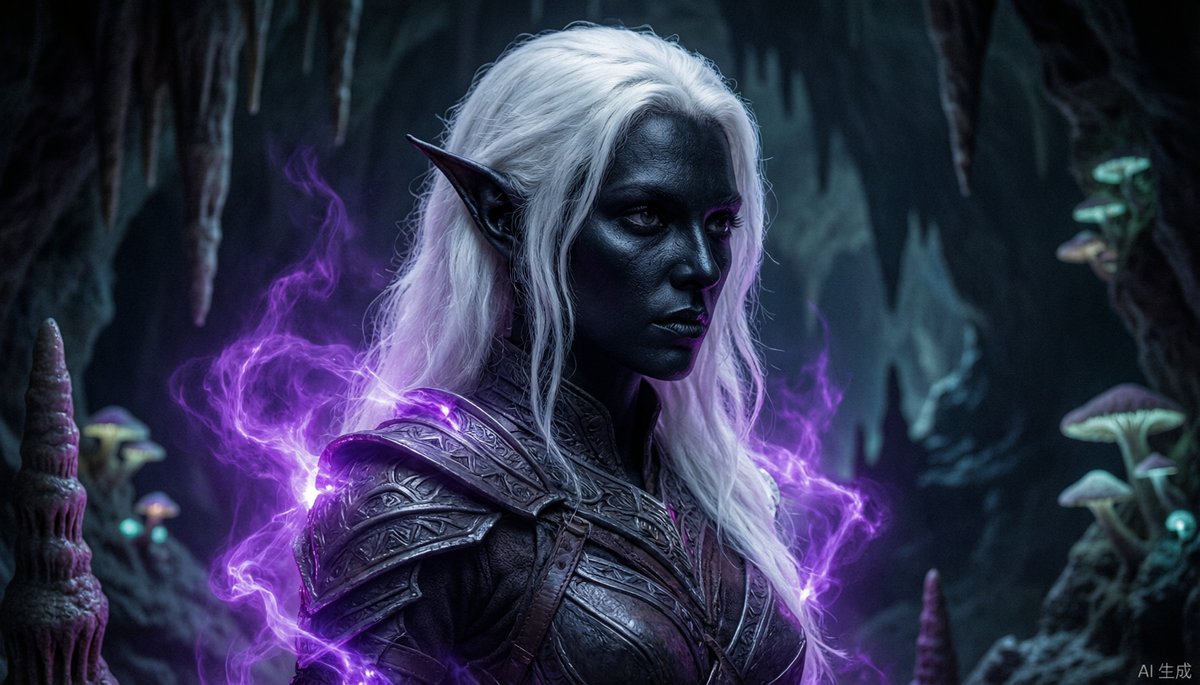
Drow names are among the most distinctive in all of fantasy nomenclature. As dark elves who dwell in the perpetual darkness of the Underdark, drow have developed naming conventions that set them apart from their surface-dwelling cousins. Drow names frequently use X, Z, V, and apostrophes to create an exotic, dangerous sound that reflects their alien culture and often sinister nature.
The Deep Hook: The Web of House and Spider
Drow names are political weapons in a society of intrigue. In the matriarchal city-states of the Underdark, a drow's name announces their house, their rank, and their willingness to destroy anyone who threatens their position. Female names are longer and more elaborate because females hold power as priestesses. Male names are shorter because males serve as expendable warriors and wizards.
This political reality shapes drow naming in three critical ways:
- Names are weapons: In drow society, introducing yourself with your full house name is a threat. "I am Riz'zt V'lorn, third son of House V'lorn" is not a greeting — it is a declaration of power and a warning to anyone considering treachery.
- House names supersede personal names: A drow without a house is nothing — an outcast with no protection, no political backing, and no identity. Houseless drow are often killed on sight or enslaved. The house name is survival.
- Gender determines name length: In the matriarchal hierarchy, females receive longer, more complex names befitting their status as potential priestesses and matrons. Males receive shorter, functional names reflecting their expendable role in drow military and magical service.
Core Phonetic Patterns
All drow names share these linguistic foundations drawn from the ancient language of the Underdark:
- Unusual consonants: X Z V Q create an exotic, alien quality that distinguishes drow from surface elves
- Apostrophes: ' mark glottal stops or clan separators, adding visual and phonetic distinctiveness
- Harsh clusters: Sz Zh Xz Vr combinations sound dangerous and otherworldly
- Gender dimorphism: Female names are longer (3-5 syllables) while male names are shorter (1-3 syllables), reflecting the matriarchal power structure
Female Drow Names: Power in Syllables
Female drow names are longer, more complex, and more melodic than male names. In drow society, females hold most positions of power as priestesses and matrons of noble houses. Their names reflect this elevated status — each additional syllable is a marker of authority and arcane power.
Meaning: "Supreme dark beauty of the ruling house"
House Significance: House V'lorn is the highest-ranking house in Thal'Vond, and female members bear names of maximum elaboration
Meaning: "Spider who weaves the web of House Zauvirr"
House Significance: The apostrophe in both personal and house name marks clan loyalty and the web-metaphor central to dark elven culture
Meaning: "Priestess of divine power from the house of magic"
House Significance: House Mez'kavan is renowned for its wizardry, and female members often become high priestesses
Male Drow Names: Blades in Brief Syllables
Male drow names are typically shorter and more direct than female names. Males in drow society often serve as warriors, wizards, or artisans — expendable assets in the political games of the matron mothers. Their names are functional, sharp, and designed to be spoken quickly in battle commands.
Meaning: "Sharp blade of House V'lorn"
House Significance: The short, aggressive name reflects male status as a warrior — though this particular drow transcended his society's expectations
Meaning: "Commanding cunning of the ruling house"
House Significance: Despite male naming brevity, Jarlax's name carries weight through its association with a legendary mercenary company
Meaning: "Strong servant of the warrior house"
House Significance: A compact name reflecting the male drow's role as a useful instrument of house military power
Noble House Names: The Architecture of Power
Drow society is organized into noble houses, each with a distinctive name that carries centuries of political weight. House names are passed down through generations and are often more important than personal names — they announce alliances, rivalries, and rank in the endless intrigue of Underdark politics.
House Name Structure
Drow house names follow specific patterns that signal their origin and status:
Apostrophe clans: V'lorn H'cath Mez'kavan Ss'zith — The apostrophe marks a clan subdivision within the house
Double-name houses: Faen Tlabbar Zauvirr V'reznak — Longer names indicate older, more established houses
Compound houses: Oblodra Ryrr Zilvraen — Shorter, punchier names suggest military or mercantile origins
Notable Noble Houses
V'lorn — The ruling house of Thal'Vond, first among all drow houses. Members of House V'lorn hold the position of First Matron Mother.
Zauvirr — A powerful house with strong military tradition, frequently competing with V'lorn for political influence in the city.
Faen Tlabbar — A merchant house controlling trade routes between the Underdark and surface world. Their double name reflects ancient commercial alliances.
Mez'kavan — Known for their mastery of arcane magic and production of powerful wizard-priestesses. Their name is synonymous with magical scholarship.
Oblodra — Known for their psionic abilities, House Oblodra fields mind-mages who serve as spies and interrogators for the ruling council.
Ryrr — A military house whose name is short and sharp, reflecting their function as the armed fist of drow political power.
Ss'zith — A house with a strong clan marker (apostrophe-zith), known for producing skilled priestesses of the dark court.
V'reznak — An ancient house whose name carries the weight of centuries of political maneuvering and strategic alliances.
Drow vs. Dark Elf: A Distinction
While "drow" and "dark elf" are often used interchangeably in casual fantasy conversation, important distinctions exist in broader fantasy literature. Drow specifically refer to the Underdark-dwelling subrace of elves with distinctive naming conventions, matriarchal society, and dark cultural practices. "Dark elf" may refer to other variations like the Dökkálfar of Norse mythology, the dark elves of Warhammer Fantasy, or the Dunmer of The Elder Scrolls.
Our generator focuses on classic drow-style names, but the phonetic principles — unusual consonants, apostrophes, harsh clusters — apply to most dark elf naming conventions across fantasy literature.
Subrace Variations
Fantasy RPGs and supplemental materials recognize several drow subraces, each with distinct naming tendencies:
Drow (Standard)
The most common drow variant, dwelling in the great city-states of the Underdark like Thal'Vond and Ch'Ryth. They follow the standard naming conventions with X, Z, V consonants and apostrophe markers.
Female examples: Zilvra Briza Eclavdra Liriel Malice Quarra Ryl Zesstra
Male examples: Riz'zt Jarlax Kyrnil Nalfein Ryzen Szordin Valas Zar
Sszaklar (Winged Drow)
The Sszaklar are a rare winged drow subrace who dwell in caverns with bioluminescent fungi. Their names incorporate additional sibilant sounds and references to flight and darkness, reflecting their unique physical adaptation.
Examples: Szass Szaszlar Vhisszik Xsszithra Zszirael
Reformed Drow
Drow who have rejected the old ways and seek redemption on the surface. Their names often soften the harsh drow consonants, incorporating more melodic elvish elements while retaining Underdark roots.
Examples: Halafarin Qilué Laeral Syluné
Pronunciation Guide
Drow pronunciation emphasizes sibilant and exotic sounds from the ancient Underdark language:
- "Sz" as "shz" or "s-z" blend: Szordin = "SHZOR-din" with tongue behind teeth
- "Zh" as in "measure": Ryzen = "RYE-zhen" with buzzing z
- "X" as "z" or "ks": Zauvirr = "ZOW-vir" or "eks-ow-vir"
- Apostrophes mark glottal stops: V'lorn = "vuh-LORN" with brief pause at apostrophe
- Stress typically falls on the last or second-to-last syllable: RIZ'zt, vuh-LORN, zee-LOK-tee-ah
- Double consonants are pronounced distinctly: Ryrr = "RYRR" with rolled or prolonged r
Naming Patterns in Fantasy Gaming
Drow naming conventions in fantasy gaming follow distinctive linguistic patterns that make the culture feel cohesive and alien:
- Apostrophe markers: House names frequently use apostrophes to indicate clan subdivisions or glottal stops, creating a visual and phonetic signature that immediately identifies drow heritage.
- Exotic consonants: The heavy use of X, Z, V, and Q consonants distinguishes drow speech from other elven dialects and surface languages, giving names an otherworldly quality.
- Gender dimorphism: Female names tend toward 3-5 syllables with elaborate constructions, while male names are typically 1-3 syllables — sharp and functional. This reflects the matriarchal power structure common to drow society.
- House identity: A drow's house name is often more important than their personal name, functioning as both political credential and survival mechanism in the ruthless hierarchy of Underdark civilization.
Our generator creates original names following these established patterns while ensuring all names are free to use in your campaigns.
Drow Naming in Fantasy RPGs
In fantasy role-playing games, drow naming conventions reflect their cultural values and political structure:
- Birth names: Given by the matron mother of the house, often incorporating elements that prophesy the child's role in house politics
- House names: Always used in formal introductions among drow; omitting your house name is either an act of extreme humility or a declaration of exile
- Surface names: Drow who live on the surface often adopt simplified names or aliases to avoid the prejudice that accompanies recognition of their heritage
- Honorifics: Titles like "Matron Mother," "Weapon Master," "Archmage," or "Patron of House X" precede names in formal address