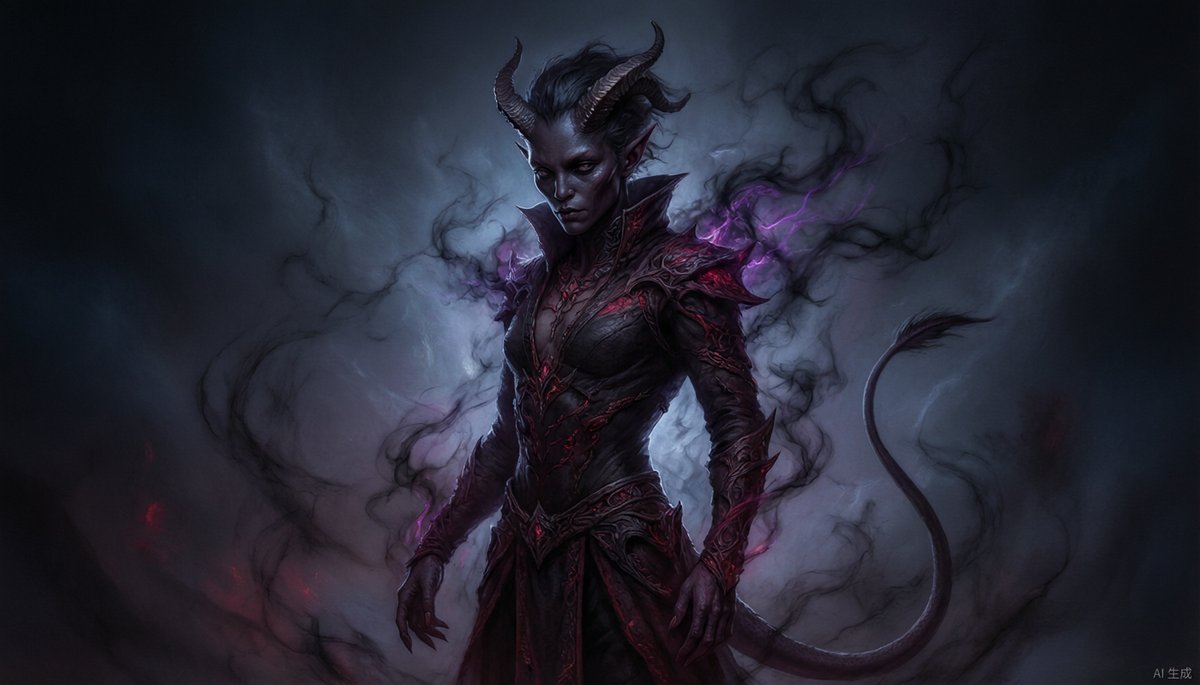
Mysterious tiefling with horns and tail, dark exotic features, wearing infernal-inspired clothing

Tiefling Name Generator

Generate tiefling names for D&D 5e — infernal heritage names and virtue names that transcend dark origins

Generate Tiefling Names for Your Fantasy RPG Adventures

How to Choose Between Infernal and Virtue Names

The defining question for every tiefling player: does your character embrace their fiendish blood or reject it? This isn't just a roleplay choice -- it's a naming decision that signals your character's identity to everyone they meet. Here's how to make that choice based on your character's class, background, and personality:

Choose an Infernal Name If Your Tiefling:

  • Is a Warlock with a fiendish patron: Your character has made a pact with a devil, demon, or other fiend. An infernal name like Kordai, Baalzephon, or Vespera signals that you wear your heritage as armor. You're not ashamed of what you are -- you're embracing it.
  • Comes from a tiefling family that traces its bloodline: Your character was raised by tiefling parents who proudly preserved their infernal naming traditions. You were given an infernal name at birth, and you've kept it because it connects you to your ancestors.
  • Uses their heritage as a weapon: Your character knows that other races fear tieflings, and they lean into that fear. An infernal name like Pharax or Damakos is a threat -- it tells people "I am dangerous, and I want you to know it."
  • Is a Sorcerer with a demonic bloodline: Your magic comes from your fiendish heritage, and you're not trying to hide it. An infernal name reflects your acceptance of your supernatural origins.

Choose a Virtue Name If Your Tiefling:

  • Is a Paladin or Cleric seeking redemption: Your character has turned away from their fiendish heritage and embraced a divine calling. A virtue name like Redemption, Mercy, or Hope declares your break from darkness. You're not just good -- you're actively fighting against your infernal nature.
  • Was raised by humans and wants to fit in: Your character grew up in a human community and was given a human name at birth. As an adult, you've chosen a virtue name to signal that you're more than your bloodline. You want people to judge you by your ideals, not your heritage.
  • Is running from their past: Your character did something terrible in their youth -- maybe they served a fiendish master, maybe they hurt someone they loved. Now they've adopted a virtue name like Promise or Resolve as a reminder of who they want to become.
  • Is a Bard or Rogue who uses charm over fear: Your character knows that an infernal name scares people, and they want to disarm that fear. A virtue name like Glory or Triumph makes you memorable for the right reasons -- your wit, your skill, your charisma.

Choose a Dark Virtue Name If Your Tiefling:

  • Embraces the shadow within: Your character isn't evil, but they've accepted that they have darkness in them. A dark virtue name like Sorrow, Wrath, or Vengeance acknowledges that you're not trying to be good -- you're trying to be honest about what you are.
  • Is a Ranger or Fighter who's seen too much war: Your character has been through trauma, and they've come out the other side harder, not softer. A name like Death or Doom reflects the reality of what you've survived.
  • Is seeking revenge, not redemption: Your character was wronged -- maybe by a fiend, maybe by the society that shunned them -- and now they're fighting back. A dark virtue name like Vengeance or Ruin is a declaration of intent.

Use Both Names If Your Tiefling:

  • Navigates multiple worlds: Your character uses their infernal name among other tieflings or fiends, but switches to a virtue name when dealing with humans or other races who might be suspicious of their heritage. You're code-switching -- adapting your identity to fit the situation.
  • Is conflicted about their identity: Your character hasn't decided whether to embrace or reject their fiendish blood. They use both names because they're still figuring out who they are. This is especially common for young tieflings who haven't yet committed to a path.
  • Has a public and private identity: Your character is known by one name in their public life (adventuring, politics, trade) and another in their private life (family, lovers, close friends). The infernal name is who you really are; the virtue name is who you pretend to be.

The Psychology of Tiefling Names

A tiefling's name is never just a label -- it's a statement of identity, a declaration of intent, and a response to the prejudice they face every day. Understanding the psychology behind tiefling naming helps you create characters with depth and motivation.

Names as Armor

Tieflings who choose infernal names are often using them as armor. They know that other races fear them, and they lean into that fear. A tiefling named Baalzephon or Kordai is saying: "Yes, I'm dangerous. Yes, I have fiendish blood. And I'm not going to apologize for it." This is a defensive strategy -- by embracing the fear, they take away its power over them.

Example: A tiefling warlock named Vespera knows that humans flinch when she introduces herself. She's learned to use that flinch to her advantage -- by the time they recover, she's already cast her spell. Her infernal name is a weapon, and she wields it with precision.

Names as Penance

Tieflings who choose virtue names are often using them as penance. They feel the weight of their fiendish heritage, and they're trying to atone for it -- not just to others, but to themselves. A tiefling named Redemption or Mercy is saying: "I know what I am, but I'm trying to be better." This is an aspirational strategy -- the name is a reminder of who they want to become.

Example: A tiefling paladin named Courage was once a coward who fled from a battle that got their friends killed. They chose their name as a daily reminder to be braver. Every time someone calls them "Courage," they feel the weight of that expectation -- and they try to live up to it.

Names as Masks

Tieflings who use both infernal and virtue names are often wearing masks. They've learned that different names open different doors, and they switch between them depending on who they're talking to. This is a survival strategy -- by adapting their identity to the situation, they can navigate a world that fears and distrusts them.

Example: A tiefling rogue named Pharax in the thieves' guild becomes "Promise" when dealing with merchants. The guild members respect the infernal name -- it signals that you're dangerous. The merchants prefer the virtue name -- it signals that you're trustworthy. Both are masks, and the rogue wears them with equal skill.

Names as Rejection

Tieflings who choose dark virtue names are often rejecting both the light and the dark. They're not trying to be good, and they're not trying to be evil -- they're trying to be honest about the full spectrum of what they are. A tiefling named Sorrow or Wrath is saying: "I'm not your hero, and I'm not your villain. I'm just me."

Example: A tiefling fighter named Death has seen so many battles that they've stopped pretending war is glorious. Their name isn't a threat -- it's a statement of fact. They've killed people, and they've watched people die, and they're not going to sugarcoat that reality with a prettier name.

Complete Tiefling Character Examples

Here are four complete tiefling characters with names, classes, backgrounds, and stories that demonstrate how the naming system works in practice:

Kordai Vell, Tiefling Warlock
Name Type: Infernal
Class: Warlock (The Fiend patron)
Background: Charlatan
Name Meaning: "Kordai" (he who binds death) + "Vell" (the veil between worlds)
Backstory: Kordai made a pact with a fiend when he was 16, trading his service for the power to save his dying sister. The pact worked -- his sister lived -- but now Kordai owes a debt he can never repay. He uses his infernal name as a reminder of what he's done, and as a warning to anyone who tries to stand between him and his next job. He's not proud of his heritage, but he's not ashamed of it either. It's just who he is.
Redemption, Tiefling Paladin
Name Type: Virtue
Class: Paladin (Oath of Devotion)
Background: Acolyte
Birth Name: Kallista (abandoned)
Name Meaning: "Redemption" (the act of being saved from sin)
Backstory: Kallista was born to a tiefling family that served an archdevil. She was raised to believe that fiendish blood was a gift, not a curse. At age 20, she had a vision of destruction wrought by her family's patron and the demonic forces they served. She fled, abandoned her birth name, and took the name "Redemption" as a declaration that she would spend her life atoning for her family's sins. She's not sure if redemption is possible, but she's going to try.
Pharax/Promise, Tiefling Rogue
Name Type: Dual (Infernal + Virtue)
Class: Rogue (Thief archetype)
Background: Criminal
Name Meaning: "Pharax" (a harsh infernal name that inspires fear) + "Promise" (a virtue name that inspires trust)
Backstory: Pharax grew up in the streets of Waterdeep, learning to pick pockets and climb walls to survive. In the thieves' guild, they're known as Pharax -- a name that signals you're dangerous and not to be crossed. But when they're working a mark, they become "Promise" -- a name that makes merchants and nobles trust them. Both names are masks, and Pharax has forgotten which one -- if either -- is real.
Wrath, Tiefling Fighter
Name Type: Dark Virtue
Class: Fighter (Battlemaster)
Background: Soldier
Birth Name: Damakos (abandoned)
Name Meaning: "Wrath" (intense anger, often destructive)
Backstory: Damakos was a soldier in the armies of Elturel, fighting in the war against the demonic incursion. They watched their friends die, their city burn, and their family enslaved. When the war ended, they couldn't go back to being "Damakos" -- that name belonged to someone who was innocent, someone who hadn't seen what they'd seen. So they took the name "Wrath" -- not because they're angry all the time, but because they've stopped pretending that anger isn't a part of them. It's honest, and honesty is what they need now.

Using Tiefling Names in Your Campaign

For Players: Building Your Tiefling's Identity

When creating a tiefling character, start with the naming choice and work backward to the backstory. Ask yourself:

  • What is my tiefling's relationship with their heritage? Do they embrace it (infernal name), reject it (virtue name), or navigate between both (dual name)? This choice shapes how other characters perceive them.
  • What class do they play, and how does that influence their name? Warlocks and sorcerers often use infernal names because their magic comes from their fiendish blood. Paladins and clerics often use virtue names because they're seeking redemption. Rogues and bards might use dual names because they're skilled at adapting to different social situations.
  • What's their backstory? Were they raised by tieflings who preserved the infernal naming traditions? Were they raised by humans who gave them a virtue name to help them fit in? Did they choose their name as an adult, or were they born with it?
  • What does their name signal to others? An infernal name inspires fear. A virtue name inspires trust. A dark virtue name inspires unease. A dual name inspires confusion. Choose the name that creates the reaction you want.

For DMs: Populating Tiefling Communities

When creating a tiefling enclave or faction, use batch mode to generate entire populations of named NPCs. Follow these steps:

Step 1: Determine the community's attitude toward their heritage. Is this a tiefling settlement that embraces infernal traditions? A refuge for tieflings seeking redemption? A criminal gang that uses dual names to navigate both worlds?

Step 2: Generate the leader's name. Use the appropriate naming tradition to create a name for the community's leader. Their name should signal the community's values.

Step 3: Generate 5-10 member names. Use batch mode to create the community's members. If it's an infernal-tradition community, most names should be infernal. If it's a redemption-focused community, most names should be virtue names.

Step 4: Add outliers. Not everyone in the community follows the dominant naming tradition. Add a few characters who've chosen differently -- a tiefling named "Hope" in an infernal community, or a tiefling named "Kordai" in a virtue-focused refuge. These outliers create instant roleplay hooks.

Names as Plot Devices

Tiefling names can drive your campaign's plot in several ways:

  • A name change: A tiefling who's been using an infernal name decides to adopt a virtue name after a spiritual awakening. Their former allies see this as a betrayal and hunt them down.
  • A hidden identity: A tiefling has been using a virtue name for years, but their past catches up with them when someone recognizes their infernal name. Now they must choose: reveal their true identity, or run again.
  • A name prophecy: A tiefling named "Redemption" is prophesied to save the world from a demonic incursion. But they're not sure if they're capable of redemption -- or if the prophecy is even real.
  • A family feud: Two tiefling siblings have chosen opposite names: one is "Mercy," the other is "Wrath." They're on opposite sides of a conflict, and the party must navigate their family drama.

Tiefling Naming Conventions: The Complete Guide

Tiefling names are the most psychologically complex in fantasy RPGs. As descendants of humans and fiends, tieflings occupy a liminal space between worlds, and their names reflect this duality. Unlike other races where naming is cultural tradition, for tieflings, naming is an act of identity — a declaration of who they are and who they aspire to become.

The Deep Hook: Two Names, Two Natures

Tieflings occupy a unique space in fantasy naming. As descendants of humans and fiends, they may bear names reflecting their dark heritage (infernal names) or names representing their aspiration to transcend it (virtue names). This duality makes tiefling naming the most psychologically complex in fantasy RPGs. A tiefling's choice of name is a statement of identity.

This cultural reality shapes tiefling naming in three fundamental ways:

  • Names are chosen, not inherited: Many tieflings abandon their birth names upon reaching adulthood, selecting a new name that represents who they have become. A tiefling born "Kallista" might rename herself "Redemption" after a spiritual awakening.
  • Two naming traditions coexist: Infernal names connect the tiefling to their fiendish heritage, while virtue names represent transcendence. Some tieflings maintain both, using different names in different social contexts.
  • The name signals alignment: While not deterministic, an infernal name suggests a tiefling comfortable with their dark nature, while a virtue name signals aspiration toward goodness — or in the case of dark virtues, an embrace of shadow.

Core Phonetic Patterns

Tiefling names across both traditions share these linguistic foundations:

  • Infernal consonants: Z X Ph Th V create an exotic, otherworldly quality
  • Dark vowels: -or- -ae- -yx- -ez- evoke infernal languages
  • Multi-syllabic flow: Infernal names typically have 3-4 syllables with stress on penultimate or antepenultimate syllables
  • Virtue simplicity: Virtue names are single English words, usually 1-3 syllables, carrying immediate semantic weight

Infernal Names: The Language of the Abyss

Infernal tiefling names draw from the languages of demons, devils, and other fiendish entities. They sound exotic and otherworldly, featuring unusual letter combinations, harsh consonants, and an alien quality that sets them apart from human names. These names connect the tiefling to their fiendish bloodline and signal comfort with their dark heritage.

Kordai Vell — Kor (death/darkness) + dai (binding) + Vell (veil/boundary)
Meaning: "He who binds the darkness beyond the veil"
Heritage: An infernal name suggesting a tiefling with a pact to a fiendish patron, standing at the boundary between worlds
Baalzephon — Baal (lord/master in infernal tongues) + zeph (wind/storm) + on (suffix of power)
Meaning: "Storm lord of the infernal winds"
Heritage: A name evoking archdevil nobility, suggesting ancient fiendish bloodline and command over elemental darkness
Vespera Nightwhisper — Vesper (evening star) + a (feminine suffix) + Night (darkness) + whisper (secret speech)
Meaning: "Evening star who speaks in darkness"
Heritage: A female infernal name suggesting a tiefling rogue or warlock who moves between shadow and revelation

Male Infernal Names

Male infernal tiefling names are aggressive and exotic, drawing from demonic hierarchies and infernal languages. They feature strong consonant clusters and dark vowel sounds that command attention and inspire unease in those who hear them.

Examples: Ariostos Baalzephon Corvus Damakos Erevan Fenriz Ghesh Iados Kael Lorathos Kordai Nym Oriphos Pharax Razel Syldon

Female Infernal Names

Female infernal tiefling names combine dark beauty with menace. They tend toward more syllables and melodic endings while maintaining the exotic consonant patterns of the infernal tradition. These names evoke seductive danger and ancient power.

Examples: Ariella Belinda Celestia Damara Erebus Lilith Morgana Nyx Vespera

Virtue Names: Aspirations Made Flesh

Virtue names are a uniquely tiefling tradition — abstract concepts adopted as personal names. A tiefling might choose a virtue name to declare their rejection of fiendish nature, to aspire to a particular ideal, or to embody a concept that defines their existence. These names carry immediate meaning that anyone can understand, making them powerful social statements.

Positive Virtues

These names represent ideals the tiefling aspires to embody, often as a direct rejection of their fiendish heritage:

Ambition Bliss Brave Charity Courage Creed Excellence Faith Freedom Glory Hope Honor Ideal Justice Knowledge Love Loyalty Mercy Noble Passion Patience Peace Promise Quest Reason Redemption Resolve Spirit Success Temperance Triumph Truth Victory Virtue Vision Wisdom Zeal

Dark Virtues

Some tieflings embrace the shadow within, adopting virtue names that acknowledge darkness rather than rejecting it. These names are not necessarily evil — they represent an acceptance of the full spectrum of experience:

Death Deceit Despair Desire Doom Doubt Fear Grief Pain Pride Regret Revenge Ruin Sorrow Strife Terror Torment Tragedy Vengeance War Wrath

Choosing Between Infernal and Virtue Names

The choice between an infernal name and a virtue name often reflects the tiefling's personality, background, and life experiences:

  • Infernal names suggest a tiefling who embraces their heritage, is proud of their unique nature, or comes from a family or community that values their fiendish bloodline. Warlocks with fiendish patrons often retain infernal names.
  • Virtue names suggest a tiefling who seeks to transcend their heritage, has experienced discrimination and wants to prove their worth, or is on a quest for redemption. Paladins and clerics often adopt virtue names.
  • Both names are used by tieflings who navigate multiple worlds — an infernal name among other tieflings or fiends, a virtue name when dealing with humans or other races who might be suspicious of their heritage.

Subrace Variations

D&D 5e and supplemental materials recognize several tiefling subraces, each with distinct naming tendencies:

Standard Tiefling

The most common tiefling variant, descended from humans and generic fiends. They follow the standard infernal/virtue naming dichotomy without additional constraints.

Infernal examples: Kordai Lilith Corvus Nyx

Virtue examples: Hope Redemption Courage Sorrow

Feral Tiefling

Feral tieflings have a stronger fiendish physical appearance — bestial features, unnatural coloring, and more pronounced infernal traits. They tend toward harsher infernal names that reflect their wild nature.

Infernal examples: Baalzephon Fenriz Ghesh Razel

Virtue examples: Wrath Instinct Fury Savage

Winged Tiefling

Winged tieflings possess bat-like wings, a visible mark of their fiendish heritage. Their names often incorporate references to flight, sky, or freedom — whether infernal or virtue.

Infernal examples: Ariostos Pharax Syldon Vespera

Virtue examples: Freedom Ascension Glory Vision

Hellfire Tiefling

Hellfire tieflings have traded some of their infernal resistance for the ability to conjure hellfire. Their names often reference flame, brimstone, or the fires of the Nine Hells.

Infernal examples: Ignathos Brimstone Pyreth Celestia

Virtue examples: Zeal Passion Triumph Spirit

Pronunciation Guide

Tiefling pronunciation varies between traditions:

  • Infernal "Ph" as in "phantom": Pharax = "FAIR-ax" with breathy ph
  • "X" as "z" or "ks": Nyx = "NIX" (hard x) or Oriphos = "or-EE-fos"
  • "Z" always hard as in "zeal": Baalzephon = "bal-ZEH-fon"
  • Stress falls on the second-to-last syllable in infernal names: mor-DIE, ves-PAIR-ah, balz-eh-FON
  • Virtue names are pronounced as the English word: HOPE, reh-DEMP-shun, KUR-ij

Tiefling Naming Patterns in Fantasy Gaming

Tiefling names in tabletop RPGs follow distinct linguistic patterns that reflect their fiendish heritage:

  • Infernal names: Feature dark consonants (K, V, Z, X), exotic syllable structures, and meanings related to death, shadows, or binding. Examples include Kordai, Baalzephon, Vespera, and Lilith.
  • Virtue names: Are abstract concepts representing ideals or aspirations. Examples include Hope, Redemption, Courage, and Sorrow.
  • Dual names: Combine both traditions, allowing tieflings to navigate different social contexts. A tiefling might use their infernal name among their own kind and their virtue name in human society.

Our generator creates original names following these established fantasy naming conventions while ensuring all outputs are unique and free to use in your campaigns.

Tiefling Naming in D&D 5e

In Dungeons & Dragons 5th Edition, tiefling naming conventions reflect their unique cultural position:

  • Birth names: Often infernal, given by parents who embrace their fiendish heritage or by communities that never knew the tiefling's lineage
  • Chosen names: Many tieflings adopt virtue names upon reaching adulthood, selecting a concept that defines their identity or aspiration
  • Dual names: Some tieflings maintain both an infernal name and a virtue name, using each in different social contexts
  • Honorifics: Titles like "the Redeemed," "Hellsworn," or "Pact-Bound" may follow names to indicate the tiefling's relationship with their heritage
Related Generators

Frequently Asked Questions

What makes a tiefling name sound authentic?

Authentic tiefling names fall into two distinct traditions. Infernal names use exotic consonants (Z, X, Ph, Th), unusual letter combinations, and dark-sounding syllables that evoke their fiendish heritage (Ariostos, Baalzephon, Vespera). Virtue names are English words representing ideals or concepts (Hope, Redemption, Justice, Sorrow). Both types should feel otherworldly compared to typical human names.

Can I use these tiefling names for my D&D campaign?

Yes. All generated names are free to use in your tabletop RPG campaigns, novels, games, or any creative project. Our names follow established fantasy naming conventions for tieflings and are completely original.

What is the difference between infernal and virtue names?

Infernal names reflect a tiefling's fiendish bloodline with exotic, dark-sounding names featuring unusual consonants and alien syllable patterns (Kordai, Baalzephon, Lilith). Virtue names are abstract concepts that represent ideals the tiefling aspires to or embodies (Hope, Courage, Redemption, Sorrow). The choice between them is a statement of identity — whether the tiefling embraces or transcends their demonic heritage.

How do tieflings choose their names?

Tieflings may receive infernal names at birth from parents who embrace their fiendish heritage, or they may adopt virtue names later in life as a declaration of identity. Some tieflings use both: an infernal name among other tieflings or fiends, and a virtue name when dealing with suspicious outsiders. The choice often reflects the tiefling's personality, background, and how they wish to be perceived.

Are female tiefling names different from male names?

Female infernal tiefling names tend toward melodic darkness (Ariella, Celestia, Lilith, Morgana, Nyx, Vespera), while male infernal names are more aggressive and exotic (Ariostos, Baalzephon, Corvus, Damakos, Kordai). Virtue names are gender-neutral — any tiefling can bear any virtue name regardless of gender. Female tieflings in D&D lore often have names with more syllables and softer endings.

What are common virtue names?

Positive virtue names include Hope, Courage, Justice, Faith, Honor, Mercy, Wisdom, Truth, Glory, and Redemption. Dark virtue names — chosen by tieflings who embrace their shadow side — include Sorrow, Wrath, Despair, Vengeance, Ruin, Doom, and Terror. Some tieflings choose aspirational names like Quest or Promise, while others choose names reflecting past trauma like Regret or Grief.

How do I pronounce tiefling names?

Infernal tiefling names emphasize exotic sounds: 'Ph' as in 'phantom', 'X' as 'z' or 'ks', 'Z' always hard as in 'zeal'. Stress typically falls on the second-to-last syllable: mor-DIE, ves-PAIR-ah, balz-eh-FON. Virtue names are pronounced as the English word they represent. Use our speaker icon to hear any name pronounced aloud at a measured 0.8x pace.

Can tieflings change their names?

Yes, and this is a deeply meaningful act in tiefling culture. A tiefling who renounces their fiendish heritage may abandon their infernal name and adopt a virtue name. Conversely, a tiefling who embraces their dark nature may discard a virtue name for an infernal one. Some tieflings maintain both names for different social contexts. Changing your name is a public declaration of who you choose to become.