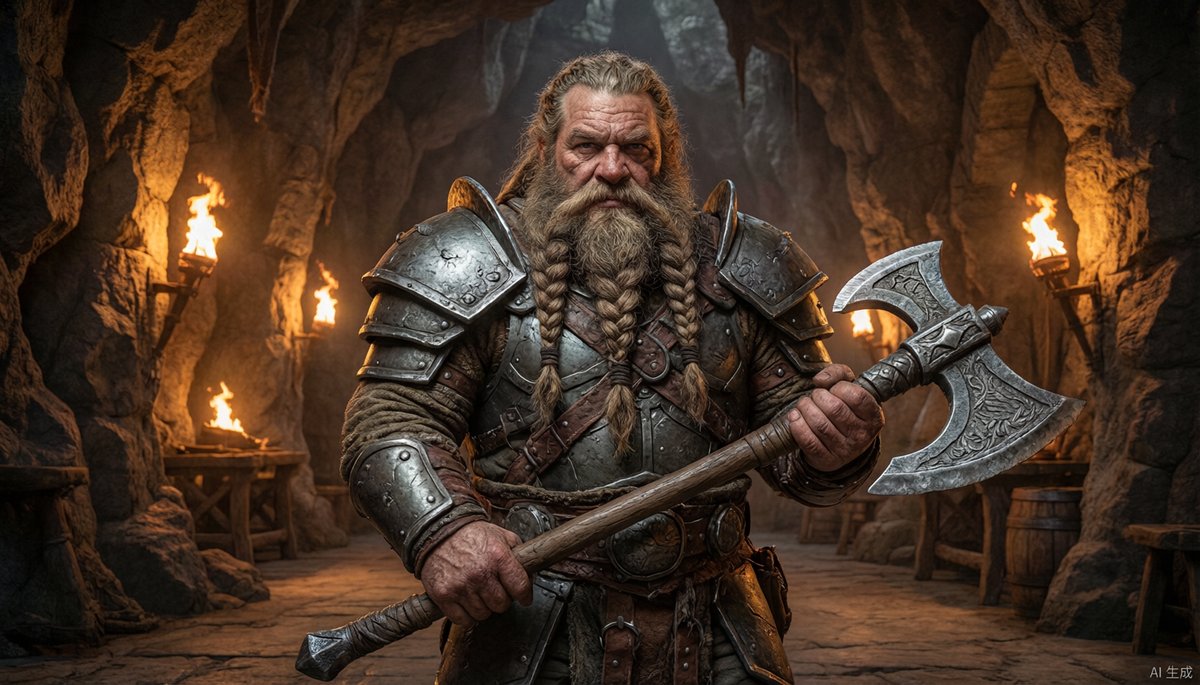
Generate Dwarf Names for Your Fantasy RPG Adventures
How Dwarven Naming Actually Works
A dwarf's name is not a label -- it is a resume, a lineage record, and a social contract. When a dwarf introduces themselves as "Boran son of Durgan, of Clan Ironforge," they are telling you who their father was, what their family does, and what reputation they carry. Every part of the name has a function. Understanding this system helps you build a dwarf identity, not just pick something that sounds Norse.
The Three Parts of a Dwarf Name
Birth Name (Magtak)
Given by the clan elder at birth. Short, sturdy, 1-2 syllables. This is the name a dwarf uses among family and close friends. It never changes. Examples:BoranDurganGrimmHelgaThror
Patronymic (Lineage)
"son of" or "daughter of" + father's birth name. Used in formal introductions. Lineage determines social standing and political alliances. Examples:Boran son of DurganGrimm son of ThrorSigrid daughter of Durgan
Clan Name (Trade Identity)
A compound word describing the family's ancestral trade. This is the surname. It carries the weight of generations. Examples:IronforgeStonehammerDeepdelverFirebeardGoldvein
Full formal introduction: "I am Kraggar son of Dorin, of Clan Rockbreaker, Shield-Bearer of the Deep Halls." Kraggar (birth name) + son of Dorin (patronymic) + of Clan Rockbreaker (trade lineage) + Shield-Bearer of the Deep Halls (earned epithet)
Choose Your Subrace Tradition
Dwarven naming varies sharply by subrace. Hill dwarves live on the surface and their names show it -- softer vowels, farming-related clan names. Mountain dwarves dwell in deep holds and produce the "classic" harsh-sounding dwarven names. Duergar were driven into the deepest Underdark and their names absorbed alien influences. Pick the tradition that matches your character's origin.
Hill Dwarves: Surface-Dwelling Traditions
Hill dwarves farm, brew, and trade on the surface. Their names retain the Norse root but soften the consonant clusters. Clan names reference agriculture, brewing, and surface trades rather than mining and smithing.
Name patterns: More open vowels, softer endings (-en, -an, -wen) Generated examples:Baelin BarleybrewCorwin WheatfieldDaina HopmasterElara Meadmaker Clan names:BarleybrewWheatfieldHopmasterMeadmakerApplepress
Mountain Dwarves: The Deep Hold Tradition
Mountain dwarves are the "classic" fantasy dwarf. Their names are built from harsh consonant clusters (Gr-, Kr-, Dr-, Br-) that sound like a pickaxe striking ore. Clan names reference mining, smithing, and warfare -- the three pillars of mountain dwarf civilization.
Name patterns: Hard consonants, guttural clusters, short punchy syllables Generated examples:Kraggar RockbreakerThordak IronforgeGromla SteelshieldBrunhilda Fireforge Clan names:IronforgeRockbreakerSteelshieldFireforgeDeepdelverMithrilhand
Duergar: The Underdark Tradition
Duergar (deep dwarves) were enslaved by mind flayers for millennia. Their names absorbed Underdark influences -- apostrophes, unusual consonant clusters, and clan names that reference darkness, psionic power, and the alien ecology of the deep earth.
Name patterns: Apostrophes, exotic consonants (kh, zh, th), references to darkness and depth Generated examples:Shuldaek VoidwalkerThember DarkstoneDerrendra MindbreakerGeth Shadowdeep Clan names:VoidwalkerDarkstoneMindbreakerShadowdeepAbysswalker
How Clan Names Reflect Trade
A dwarf's clan name is never random. It tells you exactly what that family has done for generations. When you meet a dwarf named "Boran Ironforge," you know his family has been smithing since before his grandfather's grandfather. The clan name is a professional credential, a social standing marker, and a political alliance signal all at once.
Mining & Excavation
Clans that delve into the earth for ore, gems, and precious metals.
Tool behavior: Our generator produces clan names by combining a material/element prefix (Iron, Stone, Steel, Gold, Deep, Fire, Battle, Rune) with a trade/object suffix (-forge, -hammer, -axe, -shield, -delver, -breaker, -heart, -ward). This produces names like "Ironforge," "Stonehammer," "Deepdelver," and "Runeward" that follow authentic dwarven patterns.
The Earned Name: A Dwarf's Life in Three Stages
Unlike most fantasy races, dwarves don't keep the same name throughout life. A dwarf's name changes as they prove themselves. This lifecycle system means your character's name should reflect where they are in their journey.
Stage 1: Birth Name (Childhood)
Given by the clan elder. Simple, 1-2 syllables. Used until the dwarf proves themselves worthy of an adult name.
Example: "Dorin" -- a child of Clan Ironforge, not yet tested
Stage 2: Adult Name (Coming of Age)
Earned through a rite of passage -- usually a solo mining expedition, a crafted masterwork, or a combat trial. The dwarf chooses a new name reflecting their aspiration.
Example: "Dorin Ironforge" -- has completed the Forge Trial, now bears the clan name with pride
Stage 3: Earned Epithet (Great Deed)
Bestowed by the clan after an extraordinary act of heroism, craft mastery, or leadership. This epithet becomes part of the dwarf's legacy.
Example: "Dorin Ironforge the Dragon-Slayer" -- killed a dragon that threatened the hold
Boran's progression: Birth name "Boran" → Adult name "Boran Ironshield" (earned after using an iron shield to block a killing blow) → Full title "Boran Ironshield, Lord of the Deep Hold, Heir of the Forge Kings" How to use this: Start your character with just a birth name and clan name. As your campaign progresses and your dwarf accomplishes great deeds, add an earned epithet. This gives your character a visible growth arc.
Complete Dwarf Character Examples
See how generated names become full dwarf identities. Each example includes the name breakdown, clan trade, lineage, and a campaign-ready backstory.
Kraggar Rockbreaker
Mountain Dwarf Fighter
Name breakdown:Krag- (crag/rock) + -gar (spear) = Kraggar | Rock + breaker = Rockbreaker
Full introduction: "I am Kraggar son of Dorin, of Clan Rockbreaker. My people have broken stone and found ore in the deep places of the world for forty generations."
Clan trade: Mining and excavation. The Rockbreakers discovered the deepest mithril veins in the Misty Mountains and are renowned for their ability to read stone.
Backstory: Kraggar left the hold after a cave-in killed his father. He adventured to earn enough gold to reopen the family's deepest mine. His birth name was simple "Krag," but after breaking through a sealed cavern wall with his bare hands, the clan elder granted him the full name "Kraggar Rockbreaker" -- a name that now echoes in every tavern where he drinks.
Campaign hook: The sealed cavern Kraggar broke through contained something ancient and dangerous. His clan needs him to go back and deal with what he unleashed.
Brunhilda Fireforge
Mountain Dwarf Cleric
Name breakdown:Brun- (armor) + -hild (battle) = Brunhilda | Fire + forge = Fireforge
Full introduction: "I am Brunhilda daughter of Durgan, of Clan Fireforge. We quench our blades in dragon's blood and our prayers in the forge flame."
Clan trade: Master armorers and weaponsmiths. The Fireforges are legendary for forging blades that never dull and armor that turns aside dragon fire.
Backstory: Brunhilda was expected to take over the family forge, but she heard the call of the forge god at age 40 -- late for a dwarf, which made her clan uneasy. She proved her devotion by forging a set of blessed armor that saved the hold from a demon incursion. Now she adventures to find rare ores that can be used to forge weapons against the encroaching darkness.
Campaign hook: The demon that attacked the hold was summoned by a rival clan seeking to discredit the Fireos. Brunhilda must prove her clan's innocence.
Full introduction: "I am Baelin son of Corwin, of Clan Barleybrew. Our ales are famous from the Sword Coast to the Sea of Fallen Stars, and our songs travel even further."
Clan trade: Brewing and agriculture. The Barleybrews run the most popular tavern in the surface dwarf hold, and their ales are sought after by every traveling merchant.
Backstory: Baelin was a terrible brewer -- he kept adding experimental herbs that made the ale taste like bog water. But he had a gift for stories and songs, and the tavern patrons loved his tales. His father, worried Baelin would ruin the family reputation, sent him adventuring to "find his own ingredient." Baelin collects stories from every land he visits, adding them to his repertoire like a brewer adds hops.
Campaign hook: Baelin heard a song in a tavern that mentioned a lost dwarven hold filled with a legendary brewing ingredient. He's determined to find it.
Full introduction: "I am Shuldaek of the Voidwalker bloodline. We walk where light does not reach, and we see what others cannot."
Clan trade: Scouting and espionage. The The Voidwalkers were the eyes and ears of the duergar empire before the mind flayer enslavement, and they have returned to that role in the Underdark.
Backstory: Shuldaek escaped a mind flayer caravan that was transporting duergar slaves to the Abyss. During the escape, Shuldaek's latent psionic abilities awakened -- they can sense the thoughts of creatures within 30 feet. Now they adventure on the surface, a strange and unsettling presence, seeking to build a network of informants that can warn the duergar of impending mind flayer invasions.
Campaign hook: The mind flayers know Shuldaek escaped and have sent intellect devourers to recapture them. Shuldaek can feel the devourers getting closer.
Using Dwarf Names in Your Campaign
DM Workflow: Populating a Dwarf Hold
When your players enter a dwarven city, every NPC they meet should have a name that reflects their clan, trade, and social standing. Follow this workflow to build a living dwarf society:
Establish the ruling clan: Choose a powerful-sounding clan name (Ironforge, Steelhammer, Battleaxe) and create 2-3 named leaders. These are the political power brokers.
Add guild masters: Each major trade (mining, smithing, brewing, rune-carving) should have a guild master with a clan name reflecting their specialty. "Hilda Gemcutter" leads the gem-cutters guild.
Generate common citizens: Use batch generation to quickly create names for tavern keepers, guards, merchants, and miners. Each name should have a clan surname that hints at their family's trade.
Create clan rivalries: Give different clans competing interests. The Rockbreakers (miners) might resent the Ironforges (smiths) for setting ore prices. These tensions create plot hooks.
Add the nameless: Dwarves who have been exiled or dishonored have no clan name. They go by just their birth name: "Dorin" or "Helga." Other dwarves treat them with visible discomfort.
Naming Dwarf Families and Lineages
When creating multiple dwarves from the same family, use consistent patterns to show their relationship:
Parent and child: Share the clan name. "Boran Ironforge" is the father of "Helga Ironforge." The clan name is inherited, never changed (except by exile).
Siblings: Often have names with similar phonetic patterns. "Durgan" and "Thror" are brothers -- both names use the hard consonant endings and share the sturdy dwarven sound.
Extended family: Cousins and uncles may use variant forms of the birth name. "Grimm" and "Durgan" are related -- both use the "Gr-/Durg-" consonant pattern.
Marriage alliances: When dwarves from different clans marry, the children take the father's clan name, but the mother's clan name may appear as a middle name or epithet: "Durgan son of Boran, of Clan Ironforge and Stonehammer."
Dwarf Names as Plot Devices
A dwarf's name carries mechanical and narrative weight in your campaign:
Clan reputation: A dwarf with a respected clan name gets better prices from dwarf merchants and easier access to dwarf-held territories. A dwarf with a dishonored or unknown clan name faces suspicion.
Nameless dwarves: A dwarf who has been stripped of their clan name is an outcast. They cannot enter dwarf holds without permission, cannot trade under the clan banner, and cannot call on clan allies. Restoring a nameless dwarf's name is a major quest.
Earned epithets: When a dwarf accomplishes something extraordinary, the clan elder may grant an epithet: "the Dragon-Slayer," "the Bridge-Builder," "the Oath-Keeper." This epithet becomes part of their formal name and grants social standing.
Clan debts: Clans keep records of debts owed between families. A dwarf may be adventuring to earn gold to repay a clan debt -- or to collect on one. These debts create alliances and enemies.
Secret lineage: A dwarf raised without knowing their clan name may discover they are heir to a lost or fallen clan. This revelation can unlock inheritance rights, ancient enemies, or a claim to a forgotten hold.
Pronunciation Quick Reference
Dwarven pronunciation emphasizes hard consonants and guttural sounds:
"kh" as in Scottish "loch": Khazad = "KHAA-zad" with throat-clearing sound
"zh" as in "measure": Dazh = "DAZH"
"th" as in "this" (voiced), not "thin": Thror = "THROHR" (like "the")
Double consonants are held longer: Grimm = "GRIMM" with prolonged "mm"
Stress falls on the first syllable: THOR-in, BAL-in, DWAR-in
The generator combines Norse-inspired phonetic patterns with trade-based clan names. Birth names use hard consonants (Gr-, Kr-, Dr-, Br-) and short syllables (1-2 syllables). Clan names combine a material/element prefix (Iron, Stone, Steel, Gold, Deep, Fire) with a trade/object suffix (-forge, -hammer, -axe, -shield, -delver, -breaker). This produces names like "Kraggar Rockbreaker" or "Brunhilda Fireforge" that follow authentic dwarven patterns.
What's the difference between hill dwarf, mountain dwarf, and duergar names?
Hill dwarves live on the surface and their names show it -- softer vowels, farming-related clan names like "Barleybrew" or "Wheatfield." Mountain dwarves dwell in deep holds and produce the "classic" harsh-sounding names with clan names like "Ironforge" or "Rockbreaker." Duergar were driven into the deepest Underdark and their names absorbed alien influences -- apostrophes, unusual consonant clusters, and clan names like "Voidwalker" or "Shadowdeep."
How do dwarf clan names work?
A dwarf's clan name is never random. It tells you exactly what that family has done for generations. "Boran Ironforge" means his family has been smithing since before his grandfather's grandfather. The clan name is a professional credential, a social standing marker, and a political alliance signal all at once. Our generator produces clan names by combining material prefixes with trade suffixes, following authentic patterns.
Can I use these names for dragonborn characters?
Yes, but dragonborn typically use different naming conventions. If you want a dragonborn with a dwarven-sounding name, use the mountain dwarf patterns (harsh consonants, short syllables) but replace the clan name with a dragonborn clan name like "Sheer Claws" or "Flame Heart." The phonetic patterns work for both races, but the cultural meanings differ.
What are earned epithets and how do I use them?
Earned epithets are titles bestowed by the clan after an extraordinary act: "the Dragon-Slayer," "the Bridge-Builder," "the Oath-Keeper." Start your character with just a birth name and clan name. As your campaign progresses and your dwarf accomplishes great deeds, add an earned epithet. This gives your character a visible growth arc and reflects their rising status in dwarven society.
How do I pronounce these dwarf names?
Dwarven pronunciation emphasizes hard consonants and guttural sounds. "kh" as in Scottish "loch" (Khazad = "KHAA-zad"). "zh" as in "measure" (Dazh = "DAZH"). "th" as in "this" (voiced), not "thin" (Thror = "THROHR"). Double consonants are held longer (Grimm = "GRIMM" with prolonged "mm"). Stress falls on the first syllable (BOR-an, BAL-in). Use the speaker icon to hear any name pronounced aloud.
Are female dwarf names different from male names?
Female dwarf names are equally strong but often end in -a, -dis, -grid, or -hild (Brunhilda, Ingrid, Sigrid, Helga). In traditional dwarven culture, women shave their heads and wear beards like men, so names emphasize strength and craft skill rather than conventional femininity. Female dwarves are often warriors, smiths, and rune-readers, and their names reflect those roles.
Can I generate names for an entire dwarf hold?
Yes. Use batch generation to quickly create names for multiple NPCs. For a realistic dwarf hold, establish the ruling clan first (2-3 named leaders), then add guild masters for each major trade, then generate common citizens. Each name should have a clan surname that hints at their family's trade. Use the "Full Party (4)" or "Custom Count" options to generate multiple names at once.