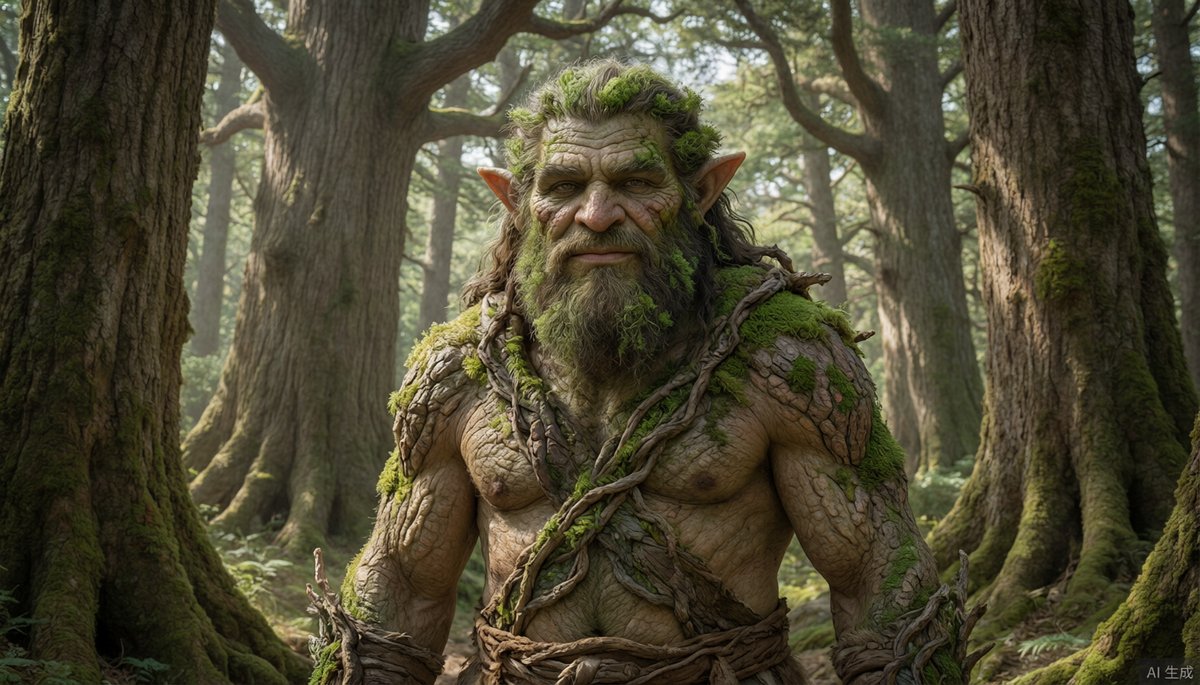
Tall firbolg forest guardian with giant heritage, surrounded by ancient trees and nature magic

Firbolg Name Generator

Generate firbolg names for D&D 5e — giant heritage names, forest names, seasonal names, and hidden true name traditions

Generate Firbolg Names for Your Forest RPG Character

Giants of the Forest: Firbolg Naming Between Two Heritage

The firbolg are a people caught between two worlds -- the towering legacy of the giants from whom they descend, and the quiet, rooted life of the forests they have chosen to call home. This duality is written into every aspect of their culture, but nowhere more clearly than in their names. A firbolg does not have one name. A firbolg has four: a giant name that echoes with ancestral thunder, a forest name that whispers with leaves, a seasonal name that marks their birth in the turning of the year, and a clan name that roots them to a specific grove or woodland. And beneath all of these, hidden like the deepest root of the oldest tree, lies the true name -- the name that the forest spirits know, the name that is never spoken aloud, the name that connects a firbolg to the living heart of the world.

Understanding firbolg naming is not merely an exercise in cultural anthropology. It is a window into the soul of a people who chose to shrink themselves from giant-dom in order to become guardians of the small, the green, and the growing. Every name a firbolg carries tells part of this story -- the story of a race that remembers where it came from but has chosen where it is going. For players who wish to roleplay a firbolg authentically, and for Dungeon Masters who want to create firbolg NPCs with depth and history, the naming system is the key that unlocks everything else.

The four names of a firbolg are not used interchangeably. Each has its own context, its own audience, and its own weight. A firbolg who uses the wrong name in the wrong setting commits a social error that ranges from mildly embarrassing to deeply offensive. The giant name is for ancestors and ceremony. The forest name is for daily life and strangers. The seasonal name is for friends and family. The clan name is for matters of territory and community. And the true name -- the hidden name -- is for the forest alone.

The Four Names of a Firbolg

Every firbolg carries four names, each serving a distinct purpose in their cultural and spiritual life. Together, these four names form a complete identity that acknowledges ancestry, environment, season, and community -- the four pillars of firbolg existence.

  • Giant Name (Ancestral Name): The giant name is the oldest and most formal of the four. It is inherited from the firbolg's giant ancestors and follows the naming patterns of giant-kin: long, rumbling, multi-syllabic names that sound like distant thunder rolling across mountain valleys. Giant names are designed for the deep vocal apparatus of giants, and they include sounds that smaller races find difficult to reproduce. Male giant names tend to end in hard consonants (-dak, -mund, -kar, -nar), while female giant names incorporate more resonant vowels (-da, -na, -wen, -tha). A giant name is spoken only during formal ceremonies, when addressing other giant-kin, or when invoking ancestral power. Most firbolg go years between speaking their giant name, and some consider it a relic of a past they have chosen to move beyond.
  • Forest Name (Daily Name): The forest name is the name a firbolg uses in everyday life. It is shorter, softer, and drawn from the language of the natural world -- the names of trees, flowers, stones, and natural features. Forest names are designed to be easy for other races to pronounce and remember, serving as the firbolg's public face in a world dominated by smaller, shorter-lived peoples. Common forest names include Ash, Fern, Moss, Thorn, Elm, Birch, Reed, Glen, Brook, and Sage. A firbolg introduces themselves with their forest name to strangers, uses it in trade and diplomacy, and answers to it in casual conversation. The forest name is the name that appears on legal documents, market ledgers, and tavern guest books.
  • Seasonal Name (Birth Name): The seasonal name marks the time of year the firbolg was born and serves as a kind of birth epithet. Unlike other names, the seasonal name is not chosen by the firbolg or their parents -- it is given by the forest itself. In the days following a firbolg birth, the forest spirits whisper the seasonal name to the parents through signs in the natural world: the way the wind moves through the trees, the pattern of frost on a leaf, the song of a particular bird. Spring-born firbolg receive names like Bloomwalker, Seedling-keeper, Raincaller, Dawngrow, or Springleaf. Summer-born firbolg receive names like Sunstride, Highgrowth, Warmstone, Longday, or Brightcanopy. Autumn-born firbolg receive names like Leaf-faller, Harvest-keeper, Amberstride, Coolroot, or Fadinggreen. Winter-born firbolg receive names like Snowtreader, Frostroot, Stillgrowth, Deeprest, or Barebranch.
  • Clan Name (Territory Name): The clan name identifies the specific forest, grove, or natural landmark that the firbolg's community calls home. Unlike orc clan names, which describe the clan's reputation or fighting prowess, firbolg clan names describe the clan's relationship with the land. A clan that lives among ancient oaks might be called "the Elder Grove." A clan that dwells near a mossy hollow might be called "Moss-heart Hollow." A clan that guards a circle of standing stones might be called "the Standing Stones." The clan name is used in formal introductions, territorial negotiations, and ceremonies that involve the relationship between the firbolg and their home. When a firbolg clan moves to a new forest, they eventually adopt a new clan name that reflects their new home, though the old name is preserved in songs and stories for generations.

The full formal introduction of a firbolg therefore sounds like: "[Forest Name] [Clan Name], [Seasonal Name], [Giant Name]" -- for example, "Ash the Elder Grove, Bloomwalker, son of Borundakar." In casual settings, only the forest name is used. In formal settings among other firbolg, the forest name, clan name, and seasonal name are spoken. The giant name is reserved for the most sacred occasions, and the true name is never spoken at all.

Giant Names: The Thunder of Ancestry

The giant names of the firbolg are living artifacts -- linguistic fossils that preserve the naming traditions of a race that the firbolg have not fully been part of for millennia. When a firbolg speaks their giant name, they are reaching back through countless generations to the time when their ancestors walked among the giants, spoke the Giant language as their mother tongue, and measured their worth in the same terms as their towering progenitors. The giant name is a thread connecting the forest-dwelling firbolg of today to the mountain-striding giants of legend.

The Structure of Giant Names

Giant names follow patterns that reflect the physical and cultural characteristics of giant-kin. They are longer than the names of most mortal races -- typically three to five syllables -- because they were designed to be spoken by voices that could carry across mountain valleys and through cavern systems. A giant name is not merely said; it is projected, resonated, felt in the chest of the speaker and the listener alike.

The phonetic structure of giant names includes several distinctive features:

  • Deep consonants: Giant names favor consonants produced deep in the throat and chest -- B, D, G, K, R, Th (voiced). These sounds resonate in the large chest cavities of giants and carry over long distances. A name like "Borundakar" is designed to boom like thunder when spoken by a giant voice.
  • Rumbling syllables: Giant names often include syllables that create a rolling, rumbling effect when spoken -- "dakar," "mundar," "grimdak," "thulgar." These syllables mimic the sound of an earthquake or a distant avalanche, invoking the raw power of the earth that giants revere.
  • Compound structure: Many giant names are compound words, combining two or more elements that describe the bearer's ancestry, achievements, or relationship to the natural world. "Borundakar" might break down as "borun" (stone/earth) + "dakar" (walker/strider), meaning "earth-strider." "Thulgrimund" might be "thul" (thunder) + "grim" (fierce) + "mund" (protector), meaning "thunder-fierce protector."

Male Giant Names

Male firbolg giant names tend to end in hard consonants that evoke solidity and strength. The endings -dak, -kar, -mund, -nar, -grim, -bek, and -dor are all common in male giant names, reflecting the giant cultural emphasis on physical power and endurance.

Male Giant Names:
Borundakar (earth-strider), Thulgrimund (thunder-fierce protector), Dromdaknar (valley-walker), Korundar (mountain-voice), Hildbekar (battle-fierce), Mornthalgar (dawn-thunder), Yargrimdak (fierce-stone walker), Fendornakar (forest-guardian), Storbekmund (great-fierce protector), Bramthundar (hill-thunder voice)

Female Giant Names

Female firbolg giant names incorporate more resonant vowels and softer endings while maintaining the rumbling quality of the giant tradition. The endings -da, -na, -wen, -tha, -ga, -ra, and -la are common in female giant names, reflecting the giant cultural emphasis on wisdom, nurturing, and the deep connection between giant women and the earth.

Female Giant Names:
Brundatha (earth-mother), Grulwenna (fierce-grace), Thulmora (thunder-heart), Droga (valley-keeper), Hildana (battle-grace), Morntha (dawn-wisdom), Yargra (fierce-earth), Fenda (forest-keeper), Storna (great-voice), Bramwenna (hill-grace)

When Giant Names Are Spoken

The giant name is not used casually. It is spoken only in specific contexts, each of which carries significant cultural weight:

  • The Rite of Ancestral Remembrance: An annual ceremony held at the winter solstice, when firbolg gather to honor their giant ancestors. During this rite, each firbolg speaks their giant name aloud, allowing the sound to carry into the sky where the ancestors can hear it. The ceremony is both a remembrance and a reaffirmation -- by speaking the giant name, the firbolg acknowledges that they carry giant blood, even if they have chosen to live as forest-dwellers.
  • Negotiations with Giant-Kin: When firbolg deal with other giant-kin races -- hill giants, stone giants, frost giants, or cloud giants -- they introduce themselves with their giant name as a sign of respect and shared heritage. A giant who is addressed by their giant name by a firbolg recognizes the firbolg as kin, even if they consider them diminished.
  • Moments of Great Danger: When a firbolg faces a threat that requires them to call upon the raw power of their giant heritage -- fighting a dragon, holding back a flood, standing against an army -- they may speak their giant name as a battle cry. The act of speaking the giant name in such moments is believed to channel ancestral strength into the firbolg, granting them a temporary surge of giant-like power.
  • Coming of Age: When a young firbolg reaches adulthood (typically around age 80-100 in human years), they are formally presented with their giant name by the clan elders. Until this ceremony, the young firbolg uses only their forest name and seasonal name. The presentation of the giant name marks the moment when the firbolg is considered a full member of the community, carrying the full weight of their ancestral heritage.

Forest Names: The Whisper of the Trees

If the giant name is the thunder of ancestry, the forest name is the whisper of the trees. When the firbolg chose to leave the mountains and the open plains and make their homes in the deep forests, they also chose to adopt new names -- names that reflected their new life among the roots and branches. Forest names are shorter, softer, and drawn from the vocabulary of the natural world. They are designed to be spoken quietly, to blend with the sounds of wind and water and birdsong, to be easy for the smaller races to remember and pronounce.

The Philosophy of Forest Names

The adoption of forest names was not merely practical -- it was philosophical. The firbolg who chose these names were making a statement: they were declaring that they were no longer giants, that they had chosen a different path, and that their identity would be shaped by the forest rather than by their ancestry. A forest name is an act of self-definition, a rejection of the giant expectation that firbolg should be smaller versions of their progenitors.

This philosophy is reflected in the simplicity of forest names. Where giant names are long and complex, forest names are short and direct. Where giant names thunder, forest names whisper. Where giant names invoke power and strength, forest names invoke connection and harmony. A firbolg named "Ash" is not claiming to be as mighty as an ash tree -- they are claiming to be as rooted, as patient, and as intertwined with the forest as the tree itself.

Common Forest Names by Gender

Firbolg forest names are largely gender-neutral, reflecting the firbolg cultural belief that one's relationship with the forest is not defined by gender. However, some names are more commonly used by males or females based on tradition rather than rule.

Commonly Male Forest Names:
Ash, Oak, Thorn, Elm, Birch, Reed, Glen, Brook, Moss, Fern, Cedar, Pine, Stone, Flint, Bark, Root, Branch, Timber, Heath, Marsh
Commonly Female Forest Names:
Fern, Lily, Moss, Sage, Willow, Birch, Hazel, Ivy, Rose, Violet, Daisy, Clover, Petal, Bloom, Dew, Rain, Mist, Brook, Glen, Heather
Gender-Neutral Forest Names:
Ash, Elm, Oak, Reed, Thorn, Sage, Brook, Glen, Moss, Cedar, Pine, Stone, Flint, Root, Branch, Heath, Marsh, Ivy, Hazel

Choosing a Forest Name

Unlike giant names (which are inherited) and seasonal names (which are given by the forest spirits), forest names are chosen -- but not by the firbolg's parents. In firbolg tradition, a young firbolg chooses their own forest name during a solo journey into the deep forest, typically undertaken between the ages of 30 and 50. During this journey, the young firbolg lives alone in the forest for a period of days or weeks, listening to the trees, watching the animals, and waiting for the forest to reveal which name fits them.

The name that the firbolg chooses is the name that feels right -- the name that the trees seem to whisper when the wind blows through them, the name that a particular bird sings at dawn, the name that comes to mind when the firbolg presses their hands against the bark of the oldest tree in the grove. This process is deeply personal and spiritual, and the chosen name is considered a reflection of the firbolg's truest self -- who they are when they are alone with the forest, stripped of ancestral expectation and social convention.

Changing a Forest Name

A firbolg may change their forest name if they feel that it no longer reflects who they are. This is not done lightly -- changing a forest name is a significant spiritual event that requires the firbolg to return to the deep forest and undergo the naming process again. Common reasons for changing a forest name include: moving to a new forest (the old name may not fit the new home), experiencing a profound personal transformation (loss, love, spiritual awakening), or feeling that the original name was chosen in immaturity and no longer resonates.

When a firbolg changes their forest name, the old name is not forgotten -- it is spoken during a farewell ceremony and then released to the wind. The new name is spoken during a welcome ceremony and then recorded in the memory of the grove. Other firbolg may use either name when referring to the individual, depending on which era of their life is being discussed.

Seasonal Names: The Turning of the Year

The seasonal name is perhaps the most poetic of the firbolg's four names. It is not chosen by the firbolg, not inherited from ancestors, and not adopted through personal journey. It is given by the forest itself -- whispered to the parents by the spirits of the grove in the days following the child's birth. The seasonal name marks the time of year when the firbolg entered the world, and it serves as a constant reminder that their life is intertwined with the cycles of nature.

How Seasonal Names Are Received

In the days following a firbolg birth, the parents carry the newborn into the heart of their clan's forest and present them to the eldest tree -- typically an oak, ash, or yew that has stood for centuries. The parents leave the child at the base of the tree for a period of time (ranging from minutes to hours, depending on the weather and the child's temperament), and during this time, they listen for the seasonal name.

The name may come as a whisper in the wind, a pattern of leaves falling around the child, a bird's song that repeats in a particular rhythm, or simply a feeling -- a certainty that arises in the parent's heart when they look at their child beneath the ancient branches. Once the parent believes they have received the seasonal name, they speak it aloud three times, and the forest acknowledges it with a sign: a sudden breeze, a ray of sunlight breaking through the canopy, or the call of a specific animal.

Seasonal Name Categories

Spring Names (Born during the thaw and renewal):

Bloomwalker, Seedling-keeper, Raincaller, Dawngrow, Springleaf, Thawstep, Greenwhisper, Firstbloom, Newroot, Meltsong

Spring-born firbolg are considered especially blessed, as they enter the world during the season of renewal and growth. They are expected to be nurturing, patient, and attuned to new beginnings. Many spring-born firbolg become druids, healers, or gardeners.

Summer Names (Born during the long days and high sun):

Sunstride, Highgrowth, Warmstone, Longday, Brightcanopy, Solstice-born, Midsummer, Goldleaf, Sunwarmth, Tallshadow

Summer-born firbolg are considered strong and vibrant, entering the world during the season of maximum light and energy. They are expected to be active, bold, and protective. Many summer-born firbolg become rangers, guardians, or community leaders.

Autumn Names (Born during the harvest and the fading):

Leaf-faller, Harvest-keeper, Amberstride, Coolroot, Fadinggreen, Equinox-born, Goldentree, Stillharvest, Redleaf, Lastwarmth

Autumn-born firbolg are considered wise and reflective, entering the world during the season of gathering and preparation. They are expected to be thoughtful, generous, and attuned to change. Many autumn-born firbolg become sages, storytellers, or advisors.

Winter Names (Born during the cold and the rest):

Snowtreader, Frostroot, Stillgrowth, Deeprest, Barebranch, Solstice-born, Icebark, Quietstone, Frozenstream, Nightpine

Winter-born firbolg are considered resilient and enduring, entering the world during the season of dormancy and survival. They are expected to be patient, strong, and comfortable with silence and solitude. Many winter-born firbolg become hermits, monks, or keepers of ancient lore.

The Hidden True Name: The Root Beneath the Roots

Beneath the giant name, the forest name, the seasonal name, and the clan name, every firbolg carries a fifth name -- one that is never spoken aloud, never written down, and never shared with another living being. This is the hidden true name, and it is the most sacred of all the firbolg's names. It is the name that the forest spirits whispered at the moment of the firbolg's birth, the name that connects them to the deepest roots of the world, the name that the universe knows them by even when all other names are forgotten.

The Nature of the True Name

The hidden true name is not a word in any mortal language. It is not Giant, not Common, not Elvish, not Druidic -- it is a sound that exists in the space between languages, a vibration that resonates with the fundamental frequency of the living world. A firbolg knows their true name the way they know their own heartbeat -- not as something learned, but as something that has always been there, present since before they drew their first breath.

The true name changes over the course of a firbolg's life, growing and shifting as the firbolg themselves grows and shifts. A young firbolg's true name might sound like a seedling pushing through soil -- full of potential, reaching upward. An elder firbolg's true name might sound like the deep roots of an ancient oak -- vast, complex, intertwined with the bones of the earth. This evolution is not conscious; the firbolg does not choose how their true name changes. It changes as they change, a living mirror of their inner growth.

The Power of Speaking the True Name

In firbolg tradition, speaking one's own true name aloud is the most powerful act a firbolg can perform. It is not done casually or for personal gain. The true name is spoken only in the most extreme circumstances:

  • At the moment of death: Most firbolg speak their true name once, as they die. The name is released into the forest like a seed, and it is believed to nourish the trees and plants that will grow from the firbolg's returning body. The death-name is a final gift to the world that sustained the firbolg throughout their life.
  • In defense of the forest: When a firbolg's home is threatened by a danger so great that ordinary magic and strength are insufficient, the firbolg may speak their true name to call upon the full power of the living forest. Trees may uproot themselves to block invaders, rivers may change course to flood attackers, and the very earth may shake. This power comes at a cost: speaking the true name in battle leaves the firbolg spiritually exposed, and recovery can take months or years.
  • In moments of profound spiritual transformation: A firbolg who undergoes a deep spiritual crisis -- a loss of faith, a betrayal, a encounter with the divine -- may speak their true name as part of a private ritual of renewal. The name is spoken to the oldest tree in the forest, and the tree is believed to absorb the old name and give birth to a new one.

Guarding the True Name

The idea that another being might learn a firbolg's true name is terrifying to most firbolg. In their mythology, knowing someone's true name gives power over them -- not the spiritual power that aasimar's true names carry, but a more primal, earth-bound power. A being who knows a firbolg's true name could theoretically command the forest itself to act against the firbolg, turning the trees against their guardian, drying the streams, souring the soil.

For this reason, firbolg take extraordinary measures to protect their true names. They never speak the name aloud, even in private -- they think it, feel it, hold it in their hearts. They avoid situations where the name might be extracted through magic or coercion. And they trust almost no one with the knowledge that the name exists, let alone its content.

There is one exception: a firbolg may choose to share their true name with a single trusted companion -- a spouse, a lifelong friend, or a fellow guardian of the forest. This act of sharing is considered the deepest possible expression of trust, more intimate than any physical or emotional bond. A firbolg who shares their true name is saying: "I give you power over me, and I trust you not to use it." Most firbolg never take this risk, and those who do consider the companion who receives the name to be more family than friend.

Clan Names: Rooted in the Land

A firbolg clan name is not a family name in the human sense -- it is a land name. It identifies not who your parents are, but where your home is. The clan name describes the specific forest, grove, hollow, or natural landmark that the firbolg community calls their own, and it changes when the community moves. This reflects the firbolg belief that identity is rooted in place -- you are not who your ancestors were, you are where you stand right now, with your feet on the earth and your head beneath the canopy.

How Clan Names Are Formed

Firbolg clan names typically follow one of three patterns:

  • [Natural Feature] + [Descriptor]: Names that describe a prominent feature of the clan's territory. "Moss-heart Hollow" describes a hollow filled with deep, heart-shaped moss patterns. "Silverstream Glen" describes a glen through which a silver-colored stream flows. "Thunderpine Forest" describes a forest where the trees are so tall that thunder seems to echo among them.
  • the [Adjective] [Natural Feature]: Names that describe the quality or character of the clan's home. "the Elder Grove" describes a grove of ancient trees. "the Standing Stones" describes a circle of megaliths in the clan's territory. "the Deep Root" describes a clan that lives among the massive root systems of giant trees.
  • [Ancestral Reference] + [Place]: Names that honor a significant event or figure in the clan's history. "the Giant's Footprint" describes a clan that lives near a natural formation resembling a giant's footprint. "Oakshield Glade" describes a glen where the oaks grow so thick that they form a natural shield against the wind. "Fernwalk Meadow" describes a meadow where the ferns are so tall that walking through them is like walking through a green sea.

When Clan Names Change

A firbolg clan name changes when the clan's relationship with the land changes. This can happen in several ways:

  • Migration: When a firbolg clan moves to a new forest, they adopt a new clan name after living in the new territory for at least one full cycle of seasons (one year). During this transitional year, they are known by both their old and new names, and they refer to themselves as "the people between groves."
  • Transformation of the Land: If a significant event changes the character of the clan's territory -- a forest fire, a flood, the growth of a new grove, the death of an ancient tree -- the clan may adopt a new name that reflects the transformed landscape. This is considered a moment of renewal, and the name change is accompanied by a ceremony of rebirth.
  • Division: When a firbolg clan grows too large and splits into two groups, each group adopts a new clan name that reflects their new territory. The original clan name is retired and remembered in songs, and the two new clans consider themselves siblings rather than parent and child.

Complete Firbolg Clan Names

Well-Known Firbolg Clans:
the Elder Grove (ancient forest dwellers), Moss-heart Hollow (marshland guardians), Thunderpine Forest (mountain forest keepers), the Standing Stones (megalithic territory wardens), Silverstream Glen (riverside protectors), the Deep Root (underground grove dwellers), Oakshield Glade (plains forest guardians), the Misty Vale (fog-land keepers), Stonecreek Hold (stream-and-stone community), the Ancient Canopy (treetop dwellers), Fernwalk Meadow (grassland tenders), the Giant's Footprint (heritage-honoring clan)

Complete Firbolg Character Examples

Here are five complete firbolg characters with all four names, clan affiliations, seasonal names, and backstories that demonstrate how the naming system works in practice:

Forest Name: Ash | Giant Name: Borundakar | Seasonal Name: Bloomwalker | Clan: the Elder Grove
Gender: Male
Class: Druid of the Circle of the Land (Forest)
Backstory: Ash was born in the spring, during a bloom so profuse that the forest floor was carpeted in flowers. The forest spirits whispered "Bloomwalker" to his parents as they held him beneath the eldest oak, and the name stuck. His giant name, Borundakar (earth-strider), was presented to him at his coming-of-age ceremony, when he walked alone into the deep forest for seven days and returned with bark embedded in his skin and a newfound understanding of the earth's rhythms. Ash now serves as the primary druid of the Elder Grove, tending the ancient trees and mediating disputes between the forest creatures. He uses his forest name in daily life, speaks his giant name only during the winter solstice ceremony, and guards his hidden true name with the silence of deep roots.
Forest Name: Fern | Giant Name: Grulwenna | Seasonal Name: Amberstride | Clan: Moss-heart Hollow
Gender: Female
Class: Ranger (Hunter archetype)
Backstory: Fern was born in autumn, when the leaves were turning gold and amber. The forest spirits whispered "Amberstride" as a fox ran past the newborn, its amber fur catching the last light of the setting sun. Her giant name, Grulwenna (fierce-grace), was given at her coming-of-age ceremony, when she tracked a wounded deer for three days through the deepest part of the hollow and brought it back to the clan for a proper passing. Fern chose her forest name -- simply "Fern" -- because she spent her childhood hiding among the ferns, watching the world through green fronds. She now serves as the clan's primary hunter and scout, ranging far beyond the hollow's borders to monitor threats to her people. She is known to outsiders as simply "Fern" and considers that quite sufficient.
Forest Name: Thorn | Giant Name: Dromdaknar | Seasonal Name: Frostroot | Clan: the Standing Stones
Gender: Male
Class: Monk of the Way of the Open Hand
Backstory: Thorn was born in the dead of winter, during a frost so severe that the streams froze solid and the trees groaned under the weight of ice. The forest spirits whispered "Frostroot" -- a name that acknowledged both the cold of his birth and the deep-rooted resilience that the clan hoped he would embody. His giant name, Dromdaknar (valley-walker), was presented during his coming-of-age ceremony, when he walked the length of the valley alone in winter conditions and returned with frost-bitten hands but unbroken spirit. Thorn chose his forest name because of the thorn bushes that protected the clan's perimeter -- silent, sharp, and unyielding. He now serves as the clan's guardian, patrolling the borders and training young firbolg in unarmed combat. He speaks his giant name only when addressing the standing stones themselves, which the clan believes are the petrified ancestors of their people.
Forest Name: Moss | Giant Name: Brundatha | Seasonal Name: Seedling-keeper | Clan: the Deep Root
Gender: Female
Class: Cleric of the Nature Domain
Backstory: Moss was born in early spring, just as the first seedlings were pushing through the thawing earth. The forest spirits whispered "Seedling-keeper" as a green shoot unfurled at the newborn's feet, and the clan took it as an omen that this child would be a nurturer. Her giant name, Brundatha (earth-mother), was presented at her coming-of-age ceremony, when she spent a month tending a grove of sick trees back to health using nothing than her hands, her voice, and her connection to the earth. Moss chose her forest name because of the moss that carpeted the floor of the Deep Root caverns where her clan lived -- soft, persistent, and able to grow in the darkest places. She now serves as the clan's healer and spiritual leader, tending to both the physical and emotional wounds of her people. She is one of the few firbolg who has shared her hidden true name -- with her spouse, a human druid named Willow, who has lived among the Deep Root clan for thirty years.
Forest Name: Elm | Giant Name: Korundar | Seasonal Name: Sunstride | Clan: Thunderpine Forest (formerly of the Ancient Canopy)
Gender: Male
Class: Fighter (Rune Knight) / Druid multiclass
Backstory: Elm's story is one of migration and transformation. He was born in the Ancient Canopy, a treetop-dwelling clan, during the height of summer. His seasonal name, Sunstride, reflected the way the summer sun moved through the high branches, casting shifting patterns of light and shadow. His giant name, Korundar (mountain-voice), was presented during his coming-of-age ceremony, but Elm felt disconnected from the name -- it spoke of mountains, and he had lived his entire life above the ground, among branches and leaves. When a great storm destroyed much of the Ancient Canopy, Elm's clan was forced to relocate to the Thunderpine Forest, a mountainous region where the pines grew so tall and thick that thunder seemed to echo among them. The clan adopted a new name -- Thunderpine Forest -- and Elm chose a new forest name as well: "Elm," after the sturdy, grounded tree that had sheltered his clan during the storm. He now straddles two worlds: the treetop dweller who learned to love the earth, the giant-kin who chose to be small, the warrior who heals. He speaks his old clan name, "the Ancient Canopy," in songs and stories, and his new clan name, "Thunderpine Forest," in matters of territory and community.

Using Firbolg Names in Your Campaign

For Players: Embracing the Dual Heritage

When creating a firbolg character, the four-name system gives you rich roleplaying material from the very first session. Consider these questions:

  • What is your giant name, and how do you feel about it? Some firbolg embrace their giant heritage with pride, speaking their giant name at every opportunity. Others consider it a relic of a past they have rejected. Your relationship with your giant name reflects your relationship with your ancestry.
  • What is your forest name, and why did you choose it? The forest name is the most personal of the four public names, because it is the one you chose for yourself. What drew you to that particular name? What does it say about who you are?
  • What season were you born in, and how does your seasonal name manifest? Spring-born firbolg tend toward nurturing and growth. Summer-born firbolg tend toward action and protection. Autumn-born firbolg tend toward wisdom and reflection. Winter-born firbolg tend toward endurance and solitude. Does your seasonal name fit your personality, or do you struggle against it?
  • What is your clan name, and are you still part of that clan? If you have left your clan, how does that affect your identity? Do you still use the clan name, or have you adopted a new one? Are you a firbolg without a forest -- rootless, wandering, searching for a new home?
  • Do you know your hidden true name? Most firbolg are aware of their true name from a young age, but some do not discover it until a moment of crisis or transformation. Has your character experienced this revelation? If so, how did it change them?

For DMs: Names as Plot Devices

The firbolg naming system creates natural plot hooks that can drive your campaign forward:

  • A stolen true name: A villain has discovered a firbolg PC's hidden true name and is using it to command the forest against them. Trees attack the firbolg, streams dry up in their presence, and the earth turns against their feet. The party must find a way to break the connection -- perhaps by seeking out the forest spirit who originally whispered the name, or by performing a ritual that allows the firbolg to change their true name entirely.
  • A clan name crisis: A firbolg NPC's clan has been displaced from their ancestral forest and no longer knows what to call themselves. Without a clan name, they are losing their identity and their connection to the land. The party must help them find a new home and a new name before the clan dissolves entirely.
  • The giant name summons: A firbolg PC's giant name is spoken by a powerful giant who has never met the firbolg but recognizes the name as belonging to their bloodline. The giant demands that the firbolg return to the giant homeland and claim their inheritance -- or face the consequences of refusing a direct giant summons.
  • The seasonal name prophecy: A firbolg's seasonal name contains a hidden prophecy about their destiny. The party must learn to interpret the forest signs that accompany the name -- the pattern of falling leaves, the song of a specific bird, the flow of a particular stream -- to understand what the prophecy reveals about the future.
  • The naming ceremony: A young firbolg NPC is about to undergo their coming-of-age ceremony and receive their giant name, but something goes wrong -- the forest spirits are silent, the ceremony fails, and the young firbolg is left without a giant name. The party must discover why the spirits have withdrawn and what must be done to restore the naming.

Related Generators

Frequently Asked Questions

How does firbolg naming work in D&D 5e?

Firbolg naming reflects their dual heritage as descendants of giants who adapted to forest life. Every firbolg carries two names: a giant name inherited from their ancestral lineage (long, rumbling, multi-syllabic names that sound like distant thunder) and a forest name chosen to reflect their role as guardians of the natural world (shorter, nature-inspired names drawn from the language of the forest). Additionally, firbolg receive seasonal names that mark the time of year they were born, and clan names tied to specific forests or groves they call home.

What is the difference between giant names and forest names?

Giant names are the ancestral heritage names passed down through firbolg bloodlines. They are long, rumbling, multi-syllabic names that echo the deep voices of the giants from whom firbolg descend -- names like Borundakar, Thulgrimund, or Dromdaknar. These names are used in formal contexts, when speaking with other giant-kin, or when invoking ancestral power. Forest names are the adapted names that firbolg use in daily life among the trees. They are shorter, softer, and drawn from nature -- names like Ash, Fern, Moss, Thorn, or Elm. A firbolg introduces themselves with their forest name to non-giant-kin and reserves their giant name for sacred or ancestral contexts.

What are firbolg seasonal names?

Seasonal names are epithets that mark the time of year a firbolg was born or the season in which they came of age. These names are not chosen but are given by the forest itself -- the trees, the wind, and the spirits of the grove whisper the seasonal name to the firbolg's parents shortly after birth. Spring-born firbolg receive names like Bloomwalker, Seedling-keeper, or Dawngrow. Summer-born firbolg receive names like Sunstride, Highgrowth, or Warmstone. Autumn-born firbolg receive names like Leaf-faller, Harvest-keeper, or Amberstride. Winter-born firbolg receive names like Snowtreader, Frostroot, or Deeprest.

What is a firbolg's hidden true name?

Beyond their giant name, forest name, seasonal name, and clan name, every firbolg carries a hidden true name -- a name known only to the firbolg themselves and the forest spirits who witnessed their birth. This true name is never spoken aloud, not even to the firbolg's closest companions. It is the name that the universe knows them by, the name that connects them to the deepest roots of the world. Speaking one's own true name is considered the most powerful act a firbolg can perform -- it can call the forest itself to their aid, but it also exposes their soul to the raw forces of nature. Most firbolg speak their true name only once, at the moment of death, as a final gift to the forest that sustained them.

How do firbolg clan names work?

Firbolg clan names are tied to the specific forest, grove, or natural landmark that the clan calls home. Unlike orc clan names which describe the clan's reputation, firbolg clan names describe the clan's relationship with the land. A clan that lives among ancient oaks might be called "the Elder Grove." A clan that dwells near a mossy hollow might be "Moss-heart Hollow." A clan that guards a circle of standing stones might be "the Standing Stones." When a firbolg clan moves to a new forest, they eventually adopt a new clan name that reflects their new home, though the old name is remembered in songs and stories.

Do firbolg use their giant names often?

Rarely. Most firbolg use their forest names in daily life and reserve their giant names for specific ceremonial purposes. A giant name is spoken during the Rite of Ancestral Remembrance (an annual ceremony honoring the giant bloodline), when negotiating with other giant-kin races, or in moments of great danger when the firbolg needs to call upon the raw power of their giant heritage. Some firbolg who have fully embraced their forest life may go decades without speaking their giant name, and a few never speak it at all -- considering it a relic of a past they have chosen to leave behind.

Can non-firbolg pronounce giant names correctly?

Most non-giant-kin find firbolg giant names extremely difficult to pronounce. The names are designed for the deep, resonant vocal apparatus of giants, and they include sounds that human, elf, and dwarf throats cannot cannot naturally produce. A human attempting to say "Borundakar" might manage "Borundaker," losing the subtle rumbling quality that gives the name its power. Firbolg are generally forgiving of mispronunciations from non-giant-kin, but they consider it a sign of respect when someone makes the effort to learn the correct pronunciation. Among giant-kin, a correctly spoken giant name is a greeting; a mispronounced one is merely an introduction.

Can I use these firbolg names for my D&D campaign?

Yes. All generated names are free to use in your tabletop RPG campaigns, novels, games, or any creative project. Our names follow established D&D 5e firbolg naming conventions from official source material and are checked against famous published characters to avoid IP issues. The dual naming system (giant + forest) and seasonal name patterns are inspired by official lore but the specific names generated are original.