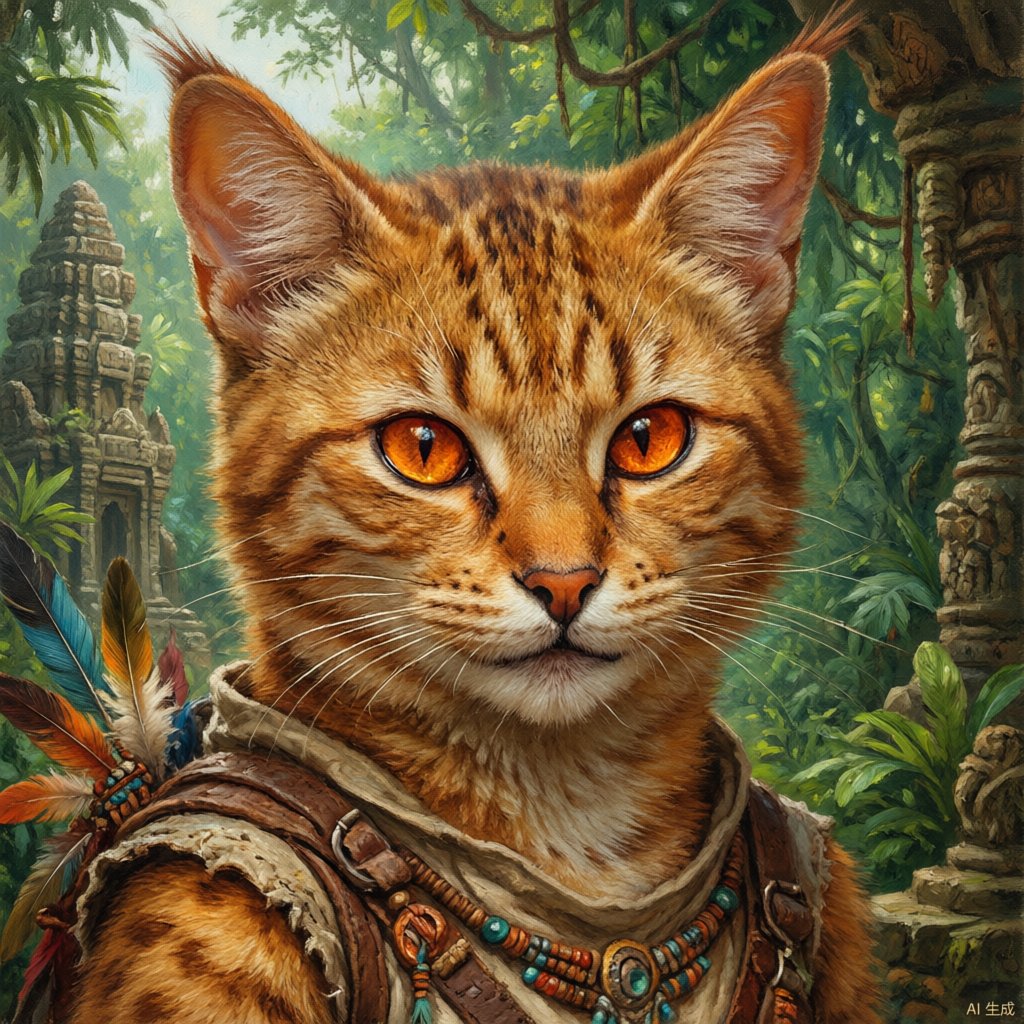
Curiosity Named: How Tabaxi Names Reflect Their Feline Nature
Tabaxi naming is unlike any other race in D&D 5e because it prioritizes personality and experience over heritage or profession. A tabaxi's name is a story waiting to be told, a snapshot of who they are at a defining moment. This creates a naming system where every name has meaning, every name has history, and every name tells you something essential about the character who bears it.
Understanding this distinction is crucial for creating authentic tabaxi characters. A tabaxi named Five Trees isn't just carrying a random name — they climbed five trees in a single day and earned their identity through that achievement. A tabaxi called Bent Whisker has a physical characteristic that defines them. A tabaxi known as Curious Mind has a personality trait so strong it became their name.
The Story-Name System: Identity Through Experience
Every tabaxi receives a personal name — their "story-name" — that reflects a significant moment, personality trait, or physical characteristic. This name is given during a coming-of-age ceremony when the young tabaxi proves themselves worthy of identification. The story-name becomes their primary identity, used by friends, allies, and anyone who knows them well.
The beauty of the story-name system is that it's deeply personal and immediately evocative. When you meet a tabaxi named Always Hungry, you know something essential about them. When you encounter Mountain Climber, you can picture their achievements. These names create instant character depth without requiring paragraphs of backstory.
Clan Names vs Personal Names: The Dual Identity
Tabaxi carry two names throughout their lives: their clan name and their personal story-name. Understanding the distinction between these two naming layers is essential for authentic tabaxi roleplay.
Clan Names: The Collective Identity
Clan names represent the tabaxi's family group, tribe, or ancestral territory. These names are shared by all members of the clan and connect the individual to their heritage.
- Purpose: Connects tabaxi to family and ancestral territory
- Structure: Often references geography or ancestral stories
- Usage: Rarely used in daily life, reserved for formal occasions
- Examples: High Grass Clan, River Bend People, Sunstone Hunters, Moonlight Stalkers
- Inheritance: Passed down through generations, never changes
Clan names are used in ceremonies, introductions to other clans, and when a tabaxi needs to establish their heritage and lineage.
Story-Names: The Personal Identity
Story-names are the personal names that identify each tabaxi as an individual. These names reflect who they are, what they've done, or how others perceive them.
- Purpose: Identifies the individual tabaxi's personality and achievements
- Structure: Simple, evocative words that paint a picture
- Usage: Used daily by friends, allies, and acquaintances
- Examples: Five Trees, Bent Whisker, Curious Mind, Quick Paws
- Earned: Given during coming-of-age or earned through notable acts
Story-names are what make each tabaxi unique. They're the names used in conversation, adventure, and everyday life.
This dual naming system creates fascinating roleplaying opportunities. A tabaxi might introduce themselves formally as "Five Trees of the High Grass Clan" when meeting dignitaries, but simply as "Five Trees" when making friends at a tavern. The clan name establishes heritage; the story-name establishes identity.
How Tabaxi Names Change: The Evolution of Identity
Unlike most D&D races, tabaxi names can evolve throughout their lives as their obsessions, curiosities, and personalities shift. This reflects the feline nature of tabaxi — they are creatures of changing interests and developing characteristics.
The Coming-of-Age Name
Every tabaxi receives their first story-name during a coming-of-age ceremony, typically around age 12-15 (by human standards). This name reflects their childhood personality or a notable early achievement.
- Example: A young tabaxi who climbs everything might be named "Climbs Everything"
- Example: A curious child might receive the name "Always Asking"
- Example: A tabaxi with distinctive fur patterns might be called "Spotted Coat"
This name stays with them through their teenage years and early adulthood, representing who they were when they first stepped into the world.
The Achievement Name Change
When a tabaxi accomplishes something truly remarkable that redefines who they are, they may earn a new name. This is not casual — it represents a fundamental shift in identity.
- Example: "Climbs Everything" becomes "Mountain Climber" after scaling a great peak
- Example: "Always Asking" becomes "Scholar's Cat" after dedicating themselves to learning
- Example: "Spotted Coat" becomes "Battle Scarred" after surviving a significant conflict
The old name isn't forgotten — it becomes part of the tabaxi's history, a reminder of who they were before they grew into who they are now.
The Obsession Name
Tabaxi are creatures of intense curiosity and obsession. When a tabaxi becomes fixated on something, their name may shift to reflect that obsession.
- Example: A tabaxi obsessed with coins might become "Counts Everything"
- Example: One fascinated by maps might earn the name "Map Reader"
- Example: A tabaxi who can't stop collecting shiny objects might be called "Shiny Finder"
These obsession names are often given by friends and fellow travelers, reflecting how others perceive the tabaxi's current fixation.
Most tabaxi keep their original story-name throughout life, as it represents a core aspect of their personality. But the possibility of name evolution adds depth to long-term character development. A tabaxi adventurer might start as "Curious Kitten" and end their career as "World Walker" — the name change reflecting their growth and experiences.
Feline Naming Patterns: The Cat in the Name
Tabaxi names often incorporate feline behaviors, characteristics, and instincts. These patterns help reinforce their cat-person nature and make names feel authentically tabaxi.
Hunting and Climbing Names
Tabaxi are natural hunters and climbers, and their names often reflect these instincts.
- Hunting: Fish Catcher, Bird Hunter, Mouse Chaser, Snake Dodger, Rabbit Tracker
- Climbing: Tree Climber, Wall Scaler, Roof Runner, Mountain Goat, High Perch
- Stalking: Silent Step, Shadow Walker, Hidden Paws, Quiet Approach
- Pouncing: Quick Leap, Swift Strike, Sudden Pounce, Fast Claws
These names emphasize the tabaxi's physical abilities and natural feline instincts.
Curiosity and Observation Names
Tabaxi are intensely curious creatures, and many names reflect their inquisitive nature.
- Curiosity: Curious Mind, Always Asking, What's That, Must Know, Wondering Eyes
- Observation: Sharp Eyes, First to See, Notices Everything, Watchful Cat, Keen Senses
- Exploration: Map Reader, Path Finder, New Places, Distant Horizons, Wandering Paws
- Collection: Shiny Finder, Treasure Hunter, Keeps Everything, Pocket Full
These names highlight the tabaxi's intellectual curiosity and desire to understand the world.
Rest and Comfort Names
Like all cats, tabaxi appreciate rest and comfort, and some names reflect this laid-back side.
- Napping: Naps in Sun, Sleepy Eyes, Warm Spot Finder, Soft Place, Dreaming Cat
- Comfort: Lazy Tail, Slow Mover, Easy Going, Relaxed Whiskers, Contented Purr
- Food: Always Hungry, Fish Lover, Meat Eater, Snack Finder, Full Belly
- Play: Chases Strings, Ball Lover, Yarn Tangler, Playful Paws, Fun Seeker
These names add humor and relatability, showing the tabaxi's softer, more domestic side.
Regional Variations: How Environment Shapes Names
Tabaxi from different regions develop distinct naming styles that reflect their environment, culture, and the challenges they face. A tabaxi from a tropical jungle will have different naming influences than one from a bustling city or harsh desert.
Jungle Tabaxi: Nature-Inspired Names
Tabaxi who grow up in tropical jungles develop names that reference the natural world around them. These names evoke the dense forests, rushing rivers, and abundant wildlife of their homeland.
- Nature References: Vine Swinger, River Crosser, Rainforest Whisper, Jungle Cat, Tree Top
- Animal Names: Jaguar's Leap, Monkey Chaser, Parrot Caller, Snake Watcher, Tiger Shadow
- Weather Names: Storm Survivor, Rain Dancer, Sun Seeker, Mist Walker, Thunder Follower
- Plant Names: Flower Sniffer, Fruit Finder, Leaf Collector, Root Digger, Branch Breaker
Jungle tabaxi names tend to be longer and more descriptive, reflecting the rich biodiversity of their environment. These names connect the tabaxi to their ancestral homeland and the natural world they evolved in.
Urban Tabaxi: City-Influenced Names
Tabaxi who grow up in cities develop names that reflect their urban environment. These names reference buildings, streets, markets, and the fast-paced life of civilization.
- Building Names: Rooftop Runner, Alley Cat, Market Thief, Tower Climber, Bridge Jumper
- Street Names: Corner Lurker, Street Smart, Crowd Walker, Night Prowler, Dawn Patrol
- Trade Names: Coin Counter, Goods Finder, Trade Negotiator, Shop Browser, Merchant's Friend
- Social Names: Crowd Pleaser, Story Teller, Song Singer, Dance Mover, Laugh Maker
Urban tabaxi names are often shorter and more practical, reflecting the fast-paced nature of city life. These names show how tabaxi adapt to human environments while maintaining their feline identity.
Desert and Arctic Tabaxi: Extreme Environment Names
Tabaxi who inhabit extreme environments develop names that reflect the harsh conditions they've adapted to.
- Desert Names: Sand Dancer, Heat Mirage, Water Finder, Sun Survivor, Night Walker, Oasis Seeker, Dune Climber, Star Navigator
- Arctic Names: Snow Stalker, Ice Fisher, Wind Fighter, Cold Paws, Warm Fur, Blizzard Walker, Aurora Watcher, Seal Hunter
These extreme environment names emphasize survival skills and adaptation. A desert tabaxi named "Water Finder" has a crucial skill for their community, while an arctic tabaxi called "Cold Paws" has adapted physically to their frozen homeland.
The Nickname Multiplication: Collecting Identities
One of the most unique aspects of tabaxi naming is their tendency to accumulate nicknames throughout their travels. Unlike other races who might have one name for life, tabaxi collect nicknames like souvenirs, each one representing a different aspect of their personality or a different chapter in their story.
- "Map Reader" — given by dwarven companions who noticed their obsession with cartography
- "Fish Lover" — earned during a month-long sea voyage where they caught every meal
- "Roof Walker" — received from city guards after being caught climbing buildings
- "Story Collector" — given by bards who appreciated their love of hearing tales
- "Night Eyes" — earned from humans who were unsettled by their darkvision glowing
These nicknames follow the tabaxi across continents and campaigns. A tabaxi might be known as "Curious Mind" in their homeland, "Map Reader" among dwarves, "Fish Lover" among sailors, and "Roof Walker" among city dwellers. Each nickname represents a different relationship, a different community, a different facet of their personality.
This nickname multiplication creates rich roleplaying opportunities. When the tabaxi meets someone from a previous adventure, that person might call them by their old nickname, creating moments of recognition and nostalgia. It also allows the tabaxi to present different aspects of their personality in different social situations.
Choosing Common Names: The Dual Identity
When tabaxi live among other races, they often adopt a "Common" name that's easier for non-tabaxi to pronounce and remember. This creates a dual identity: their true story-name used by fellow tabaxi and close friends, and their Common name used in broader society.
Translation Method
The simplest approach is to translate the story-name into Common. This preserves the meaning while making it accessible to other races.
- Story-Name: "Five Trees" → Common Name: "Five" or "Fifth"
- Story-Name: "Quick Paws" → Common Name: "Swift" or "Quick"
- Story-Name: "Curious Mind" → Common Name: "Curious" or "Quest"
- Story-Name: "Bent Whisker" → Common Name: "Bent" or "Whisker"
This method maintains the connection to the tabaxi's heritage while providing a name that other races can easily use.
Adaptation Method
Some tabaxi choose entirely new Common names that reflect how they want to be perceived by outsiders. This is especially common among tabaxi who have left their homeland and want to integrate into a new community.
- Story-Name: "Jungle Cat" → Common Name: "Felix" or "Leo"
- Story-Name: "Silent Step" → Common Name: "Shadow" or "Quiet"
- Story-Name: "Always Hungry" → Common Name: "Garnet" (sounds like "garner" — to gather)
- Story-Name: "Mountain Climber" → Common Name: "Peak" or "Summit"
This method allows the tabaxi to create a new identity separate from their heritage, which can be useful for characters who have experienced trauma or want to start fresh.
Hybrid Method
Some tabaxi combine elements of their story-name with Common naming conventions, creating a hybrid name that honors both their heritage and their adopted culture.
- Story-Name: "River Crosser" → Common Name: "River" or "Ford"
- Story-Name: "Sun Seeker" → Common Name: "Sol" or "Sunny"
- Story-Name: "Night Walker" → Common Name: "Nox" or "Walker"
- Story-Name: "Star Watcher" → Common Name: "Stella" or "Astra"
This method is popular among tabaxi who want to maintain a visible connection to their heritage while still having a name that fits into human society.
The choice of Common name is deeply personal and reflects the tabaxi's relationship with their heritage and their adopted community. Some tabaxi refuse to use a Common name at all, insisting that others learn to pronounce their story-name correctly. Others embrace their Common name fully, using their story-name only in private or with fellow tabaxi. Most fall somewhere in between, using different names in different contexts.
Common Tabaxi Naming Mistakes (And How to Avoid Them)
Creating authentic tabaxi names requires understanding their cultural values and feline nature. Here are the most common mistakes and how to fix them:
Mistake #1: Using Generic Cat Names
Wrong: Whiskers, Mittens, Fluffy, Puss
Why it's wrong: These are pet names, not tabaxi names. Tabaxi are intelligent humanoids with a complex naming culture, not house cats.
Fix: Use descriptive story-names that reflect personality or achievement: "Curious Whiskers" or "Quick Paws" instead of just "Whiskers" or "Paws."
Mistake #2: Making Names Too Mystical
Wrong: Shadow of the Moon, Whisper of Stars, Dream Walker
Why it's wrong: Tabaxi names are grounded in the physical world and personal experience, not mystical or prophetic.
Fix: Keep names simple and concrete: "Night Walker" (walks at night) instead of "Shadow of the Moon" (mystical nonsense).
Mistake #3: Ignoring the Story Element
Wrong: Felix, Leo, Tiger, Panther
Why it's wrong: These are just animal names or Common names, not tabaxi story-names that tell a story.
Fix: If using a Common name, make sure the character also has a story-name: "Felix, who was once called 'Shiny Finder' by his clan."
Mistake #4: Forgetting the Feline Nature
Wrong: Strong Arm, Sharp Mind, Fast Runner
Why it's wrong: These names could belong to any race. Tabaxi names should reflect their feline characteristics.
Fix: Incorporate cat-like behaviors: "Sharp Claws," "Quick Leap," "Silent Paws," "Night Eyes."
Complete Tabaxi Character Examples
Here are four complete tabaxi characters showing different naming styles, backgrounds, and personality types:
Five Trees of the High Grass Clan
Race & Class
Tabaxi Ranger (Level 5)
Background
Outlander — Jungle Explorer
Story-Name Origin
Five Trees earned their name during a coming-of-age ceremony where they climbed five different trees in a single day, each taller than the last. This feat demonstrated their natural climbing ability and determination to exceed expectations.
Personality
Five Trees is endlessly curious about the world beyond their jungle homeland. They collect maps, learn languages, and document everything they encounter. They're energetic and optimistic, always looking for the next adventure. Their feline instincts make them an excellent tracker and hunter, but they prefer exploration to combat.
Nicknames
"Map Cat" (given by dwarven cartographers), "Tree Hugger" (given by elves who noticed their affection for ancient trees), "Five" (shortened by human companions who found the full name cumbersome)
Adventuring Motivation
Seeking to map the entire world and document every culture, creature, and landmark. They want to create the ultimate atlas that will help future tabaxi explorers navigate the wider world.
Bent Whisker of the River Bend People
Race & Class
Tabaxi Rogue (Level 4)
Background
Criminal — Urban Thief
Story-Name Origin
Bent Whisker received their name after a childhood accident where they got their whisker caught in a fishing net, permanently bending it. Rather than seeing it as a disfigurement, the clan viewed it as a mark of resilience and adaptability.
Personality
Bent Whisker is street-smart and cynical, having grown up in a rough urban environment. They're skilled at picking pockets and navigating city streets, but they have a strong moral code — they only steal from those who can afford it and always share with those in need. Their bent whisker is a conversation starter and a reminder of their resilience.
Common Name
"Bent" — used in the city where they work as an informant and occasional thief. The name is simple, memorable, and doesn't raise suspicion about their tabaxi heritage.
Adventuring Motivation
After a job goes wrong, Bent Whisker owes a debt to a dangerous crime lord. They're adventuring to earn enough gold to pay off the debt and secure their freedom.
Curious Mind of the Sunstone Hunters
Race & Class
Tabaxi Wizard (Level 3)
Background
Sage — Arcane Researcher
Story-Name Origin
Curious Mind was named for their insatiable curiosity as a child. They asked questions about everything — why the sun moves, how fire burns, what makes plants grow. The clan recognized this intellectual curiosity as a defining trait and named them accordingly.
Personality
Curious Mind is a scholar at heart, fascinated by arcane magic and ancient lore. They collect books, scrolls, and magical artifacts, always seeking to understand how things work. Their curiosity can be distracting — they'll stop mid-conversation to examine an interesting bug or ask a passerby about their profession. Despite their absent-minded nature, they're brilliant and dedicated to their studies.
Nicknames
"Question Cat" (given by frustrated teachers), "Book Worm" (given by fellow sages), "What's That?" (given by friends tired of their constant questions)
Adventuring Motivation
Seeking ancient magical texts that were scattered across the world during a great war. They believe these texts hold the key to understanding a magical phenomenon that threatens their homeland.
Silent Step of the Moonlight Stalkers
Race & Class
Tabaxi Monk (Level 6)
Background
Hermit — Desert Ascetic
Story-Name Origin
Silent Step earned their name during a hunting expedition where they stalked prey for three days without making a sound. Their ability to move without noise, even through dry brush and loose sand, was so remarkable that the clan named them for this skill.
Personality
Silent Step is contemplative and disciplined, having spent years in desert meditation. They speak rarely but with purpose, choosing their words as carefully as they choose their steps. Their feline grace has been refined through martial arts training, making them a deadly but peaceful warrior. They prefer to avoid conflict when possible, using their stealth to escape rather than fight.
Common Name
"Silence" — used among those who don't know their full story-name. The name reflects their quiet nature and makes others curious about the tabaxi who speaks so little.
Adventuring Motivation
After years of isolation, Silent Step has received a vision calling them to protect the world from an ancient evil. They're reluctant to leave their hermitage but recognize the importance of the quest.
Using Tabaxi Names in Your Campaign
For Players: Building Your Tabaxi's Identity
- Choose your story-name first — think about what defines your character's personality or a notable achievement
- Develop your clan name — consider where your tabaxi comes from and what their family is known for
- Decide on a Common name — if your tabaxi lives among other races, how do they introduce themselves?
- Collect nicknames — as you adventure, think about what nicknames your companions might give you
- Let your name evolve — if your character undergoes a major transformation, consider earning a new story-name
For DMs: Tabaxi NPCs and Plot Hooks
Tabaxi names create instant character depth and plot opportunities:
- Five Trees — a legendary explorer who knows the location of a lost city, but will only share the information with someone who can climb the five sacred trees of their homeland
- Bent Whisker — a street informant who can gather rumors faster than anyone, but has a price for their services
- Curious Mind — a scholar who has discovered a dangerous secret in an ancient text and needs protection from those who want to silence them
- Silent Step — a mysterious monk who appears without warning to help the party, then vanishes as quietly as they came
Names as Character Development
Tabaxi naming conventions allow for unique character arcs:
- Level 1-4: Your tabaxi is young and unproven, known by their childhood story-name
- Level 5-10: They've accomplished something notable and may earn a new name or nickname
- Level 11-16: They're known across the land, accumulating nicknames from different cultures
- Level 17-20: Their original story-name has become legendary, spoken with reverence by those who know their deeds
This creates a character arc that's literally written into their name — something unique to tabaxi among all D&D races.
The Cultural Significance of Tabaxi Naming
Tabaxi naming is more than just a quirky tradition — it reflects their core cultural values and their relationship with the world around them.
Individuality Over Heritage
Unlike many D&D races that emphasize family lineage and ancestral honor, tabaxi culture prioritizes individual achievement and personality. A tabaxi's story-name reflects who they are, not who their parents were. This creates a society where individuals are valued for their unique characteristics rather than their bloodline.
Experience Over Theory
Tabaxi names reference concrete experiences and observable traits, not abstract concepts or philosophical ideals. A tabaxi named "Fish Catcher" has actually caught fish. A tabaxi called "Mountain Climber" has actually climbed mountains. This reflects the tabaxi emphasis on lived experience and practical knowledge.
Community Over Isolation
The fact that tabaxi accumulate nicknames from their travels shows their deep need for community and connection. Each nickname represents a relationship, a shared experience, a bond with another person or group. Tabaxi don't just collect things — they collect relationships and memories.
Adaptability Over Rigidity
The ability to change names, adopt Common names, and accumulate nicknames shows the tabaxi's adaptability. They're not bound by tradition — they evolve as they grow, changing their identity to reflect who they're becoming rather than who they were.
Understanding these cultural values helps you roleplay tabaxi characters more authentically. A tabaxi who values individuality will resist being defined by others' expectations. A tabaxi who prioritizes experience will seek adventure over study. A tabaxi who values community will form strong bonds with their companions. A tabaxi who embraces adaptability will thrive in changing circumstances.
Tabaxi Naming Ceremonies and Traditions
The process of receiving a story-name is an important cultural event in tabaxi society. Understanding these traditions adds depth to your character's background.
The Coming-of-Age Ceremony
When a young tabaxi reaches adolescence (around 12-15 years by human standards), they undergo a coming-of-age ceremony where they receive their first story-name. The ceremony typically involves:
- The Challenge: The young tabaxi must complete a task that demonstrates their skills and character. This might be climbing a difficult tree, tracking an animal, or solving a puzzle.
- The Observation: Clan elders watch the challenge and note the young tabaxi's strengths, weaknesses, and personality traits.
- The Naming: Based on their performance and character, the elders bestow a story-name that reflects who they are at this moment in their life.
- The Celebration: The entire clan gathers to celebrate the new adult member, sharing stories and gifts.
This ceremony establishes the tabaxi's identity and connects them to their clan's traditions.
The Name-Earning Tradition
Throughout their life, a tabaxi may earn additional names or nicknames through notable achievements or significant life changes. This is not a formal ceremony but rather an organic process where the community recognizes their growth.
- Achievement Names: Given after accomplishing something remarkable — "Dragon Dodger" after surviving a dragon encounter
- Change Names: Given after a major life transition — "Wise Cat" after years of study and reflection
- Community Names: Given by different groups they encounter — "Friend to Dwarves" after building strong relationships with a dwarven community
These earned names layer on top of the original story-name, creating a rich tapestry of identity.
The Clan Name Inheritance
While story-names are personal, clan names are inherited and shared by all members of a tabaxi's family group. Clan names typically reference:
- Geography: High Grass Clan, River Bend People, Mountain Shadow Tribe
- Ancestral Achievements: First Hunters, Storm Riders, Fire Walkers
- Totem Animals: Jaguar's Children, Eagle's Kin, Serpent's Descendants
- Natural Resources: Sunstone Hunters, Fruit Gatherers, Water Keepers
Clan names connect the individual to their heritage and provide a sense of belonging to something larger than themselves.
Advanced Tabaxi Naming Techniques
For DMs and players who want to create even more authentic and nuanced tabaxi names, here are some advanced techniques.
Compound Story-Names
Some tabaxi have compound story-names that tell a more complex story. These names combine multiple elements to create a richer narrative.
- "Climbs Before Sunrise" — a tabaxi who always rises early to climb
- "Counts Every Fish" — a tabaxi obsessed with quantifying their catches
- "Dances With Shadows" — a tabaxi who moves gracefully in dim light
- "Sings to Plants" — a tabaxi who believes music helps gardens grow
Compound names are longer but more evocative, painting a detailed picture of the tabaxi's personality or habits.
Seasonal Name Variations
In some tabaxi cultures, individuals may use different names in different seasons, reflecting the changing nature of their environment and their own evolving interests.
- Spring: "Flower Sniffer" — during the blooming season when scents are strongest
- Summer: "Sun Bather" — during hot months when they lounge in warm spots
- Autumn: "Leaf Collector" — during fall when leaves change color
- Winter: "Warm Spot Finder" — during cold months when they seek comfort
This technique adds depth to tabaxi characters who have a strong connection to natural cycles.
Relationship-Based Names
Some tabaxi are known by different names depending on who's addressing them. These relationship-based names reflect the different facets of their personality.
- To their clan: "Youngest Kit" — emphasizing their family role
- To their friends: "Joke Teller" — highlighting their humor
- To their enemies: "Quick Claws" — emphasizing their combat ability
- To strangers: "Traveler" — a neutral, non-specific identifier
This technique creates interesting roleplaying opportunities where the tabaxi's identity shifts based on social context.
Tabaxi Names in Multi-Race Parties
When tabaxi adventure with members of other races, naming dynamics become more complex. Understanding these dynamics helps create realistic party interactions.
Pronunciation Challenges
Non-tabaxi party members may struggle with tabaxi naming conventions. This creates opportunities for humor, character development, and cultural exchange.
- Shortening Names: Humans might call "Five Trees" just "Five" for convenience
- Mispronunciation: Dwarves might struggle with the soft sounds of tabaxi names
- Translation: Elves might insist on using the "proper" Common translation
- Nickname Adoption: Party members might give the tabaxi nicknames that stick
These pronunciation challenges can become running jokes that strengthen party bonds.
Cultural Misunderstandings
Other races may not understand the significance of tabaxi naming, leading to awkward or humorous situations.
- Taking Names Literally: A human might think "Always Hungry" is a complaint rather than a personality trait
- Confusing Clan and Story Names: Someone might address the tabaxi by their clan name, causing offense
- Missing the Story: Without knowing the backstory, "Bent Whisker" just sounds like a physical description
- Underestimating Complexity: Other races might assume tabaxi naming is simple because the names sound simple
These misunderstandings create opportunities for the tabaxi character to educate their companions about their culture.
Earning Party Nicknames
As the party adventures together, they'll naturally give the tabaxi nicknames based on their experiences. These nicknames become part of the party's shared history.
- "Lucky Cat" — after the tabaxi survives an improbable danger
- "Map Maker" — after they document every location the party visits
- "Fish Friend" — after they befriend an aquatic creature
- "Night Watch" — after they consistently take the midnight guard shift
These party-given nicknames show how the tabaxi integrates into the group and what role they play in the party dynamic.
Creating Your Own Tabaxi Names: A Step-by-Step Guide
Now that you understand tabaxi naming conventions, here's a practical guide to creating your own authentic tabaxi names.
Step 1: Identify the Core Trait
What defines your tabaxi character? Is it a personality trait, a physical characteristic, a notable achievement, or a behavioral quirk? This core trait will be the foundation of their story-name.
- Personality: Curious, shy, bold, lazy, energetic, thoughtful, impulsive
- Physical: Scarred, spotted, long-tailed, short-eared, bright-eyed, soft-furred
- Achievement: Climbed a mountain, swam a river, caught a dragon's scale, survived a storm
- Behavior: Naps in sun, chases strings, collects shiny things, asks questions, tells stories
Step 2: Choose Simple, Evocative Words
Tabaxi names use simple words that paint a clear picture. Avoid complex or abstract terms. Think concrete, visual, and immediate.
- Good: Quick Paws, Bright Eyes, Five Trees, Silent Step
- Bad: Magnificent Leaper, Intellectually Curious, Arboreal Accomplisher, Quietly Moving
The best tabaxi names can be understood at a glance. They're immediate and visceral, not intellectual or abstract.
Step 3: Consider the Clan Name
Think about where your tabaxi comes from and what their family is known for. Clan names should reference geography, ancestral achievements, or natural resources.
- Geography: [Landmark] Clan/People/Tribe — Mountain Shadow Clan, River Bend People
- Achievement: [Action] Hunters/Walkers/Riders — Storm Riders, Fire Walkers
- Resource: [Resource] Gatherers/Keepers/Finders — Sunstone Hunters, Water Keepers
The clan name provides context for the story-name and connects your character to a larger cultural group.
Step 4: Decide on a Common Name (Optional)
If your tabaxi lives among other races, consider what Common name they might use. This could be a translation, adaptation, or entirely new name.
- Translation: "Quick Paws" becomes "Swift"
- Adaptation: "Five Trees" becomes "Fifth"
- New Name: "Jungle Cat" becomes "Felix"
The Common name should be easy for non-tabaxi to pronounce and remember while still reflecting the character's identity.
Step 5: Plan for Nicknames
Think about what nicknames your tabaxi might accumulate during their adventures. These should reflect their experiences and relationships with different groups.
- From companions: Based on party dynamics and shared experiences
- From NPCs: Based on how different cultures perceive the tabaxi
- From enemies: Based on the tabaxi's reputation and combat style
Nicknames add depth to your character and show how they're perceived by the world around them.
Tabaxi Names in Different Campaign Settings
Tabaxi naming conventions can be adapted to fit different campaign settings while maintaining their core cultural values.
Forgotten Realms
In the Forgotten Realms, tabaxi primarily come from the tropical regions of Chult and the Jungles of Chult. Their names reflect the dense rainforests, ancient ruins, and dangerous wildlife of their homeland.
- Common Names: Vine Swinger, Jaguar's Shadow, Rain Dancer, Ruin Explorer
- Clan Names: Chultian Sunseekers, Jungle River Clan, Ancient Stone People
- Cultural Note: Tabaxi from Chult often have names that reference specific locations or landmarks from their homeland
Eberron
In Eberron, tabaxi are found throughout the cosmopolitan cities of Khorvaire, particularly in Sharn and Throneport. Their names reflect the urban environment and the diverse cultures they interact with.
- Common Names: Tower Climber, Lightning Rider, Market Walker, Sky Sailor
- Clan Names: City Shadow Clan, Tower Top People, Sky Bridge Walkers
- Cultural Note: Urban tabaxi in Eberron often adopt more Common-style names to blend into the cosmopolitan society
Homebrew Settings
For homebrew campaigns, you can adapt tabaxi naming to fit your world's unique cultures and environments. The key is to maintain the core principles: story-names that reflect personality/achievement, clan names that reference geography/heritage, and nicknames that accumulate through experience.
- Desert World: Sand Dancer, Oasis Finder, Heat Walker, Star Navigator
- Arctic World: Snow Stalker, Ice Fisher, Wind Fighter, Aurora Watcher
- Oceanic World: Wave Rider, Fish Catcher, Tide Walker, Coral Climber
- Mountain World: Peak Climber, Stone Hopper, Cloud Walker, Eagle Friend
The beauty of tabaxi naming is its flexibility — you can adapt it to any environment while maintaining its core cultural significance.
Final Thoughts: The Power of a Well-Chosen Name
Tabaxi naming is more than just a mechanical exercise — it's a tool for character development, cultural worldbuilding, and roleplaying depth. A well-chosen tabaxi name tells a story, reveals personality, and connects the character to their heritage and their community.
When you create a tabaxi character, take the time to think about their name. What does it say about who they are? What story does it tell? How does it connect them to their clan and their culture? How will it evolve as they grow and change through their adventures?
The best tabaxi names are those that make you smile, that paint a picture, that invite questions. A tabaxi named "Always Hungry" makes you wonder about their appetite and their adventures. A tabaxi called "Five Trees" makes you curious about their achievement. A tabaxi known as "Bent Whisker" makes you want to know the story behind their distinctive feature.
These names create instant character depth and provide hooks for roleplaying, storytelling, and party interaction. They're a unique feature of tabaxi culture that sets them apart from other D&D races and adds richness to your campaign world.
So the next time you create a tabaxi character, remember: they're not just named — they're curiosity named. And that makes all the difference.
How to Use the Tabaxi Name Generator
Choose Your Region
Select jungle, urban, desert, or arctic naming style. Each region has distinct naming conventions that reflect the tabaxi's environment and cultural adaptations.
Understand the Etymology
Every generated name includes a breakdown showing how the name was constructed. Learn the meaning behind story-names, clan names, and nicknames so you can choose names that fit your character's story.
Generate Character Cards
Switch to Character Generator mode to create complete tabaxi characters with class, background, personality traits, and AI portrait prompts. Perfect for players who want a fully realized character concept.
Frequently Asked Questions
How do tabaxi names work in D&D 5e?
Tabaxi names are unique among D&D races because they describe personality traits, curiosities, or life events rather than following a traditional naming pattern. Every tabaxi carries a clan name but is known by their personal "story-name" — a name that reflects who they are at their core. For example, a tabaxi named "Five Trees" might have earned that name by climbing five trees in a single day, while "Bent Whisker" might have a permanently crooked whisker from a childhood adventure.
What is a tabaxi clan name?
A tabaxi clan name is the collective name of their family group or tribe, similar to a human surname but with deeper cultural significance. Clan names often reference geographical features, ancestral stories, or the territory the clan has inhabited for generations. Examples include "High Grass Clan," "River Bend People," or "Sunstone Hunters." Tabaxi carry their clan name throughout life but are rarely called by it — their personal story-name is what identifies them individually.
Can tabaxi change their names?
Yes, tabaxi names can change as their obsessions and curiosities shift throughout life. A tabaxi who was known as "Quick Paws" in their youth might earn a new name like "Scholar's Cat" after developing an obsession with ancient texts. However, most tabaxi keep their original story-name as it represents a defining moment or core personality trait. The name change is not casual — it represents a fundamental shift in who the tabaxi has become.
What are common tabaxi nicknames?
Tabaxi collect nicknames from their travels like souvenirs. Common nickname patterns include: physical traits ("Bent Whisker," "Scarred Ear"), behavioral quirks ("Always Hungry," "Never Sits Still"), notable achievements ("Mountain Climber," "Fish Catcher"), and humorous incidents ("Fell in River," "Chased Own Tail"). These nicknames are often given by other races they encounter and may follow them across continents.
How do tabaxi choose Common names?
When living among other races, tabaxi often adopt a "Common" name that other races can pronounce and remember more easily. This is typically a translation or adaptation of their story-name. A tabaxi named "Dancing Shadows" might go by "Shadow" in a human city, while "Quick Paws" might become "Swift." Some tabaxi choose entirely new Common names that reflect how they want to be perceived by outsiders, creating a dual identity between their heritage and their adopted community.
Do tabaxi from different regions have different naming styles?
Yes, tabaxi naming styles vary significantly by region. Tropical jungle tabaxi tend to have names referencing hunting, climbing, and natural features: "Jaguar's Leap," "Vine Swinger," "Rainforest Whisper." Urban tabaxi who grow up in cities often have names reflecting their environment: "Alley Cat," "Market Thief," "Rooftop Runner." Desert tabaxi might have names like "Sand Dancer" or "Heat Mirage," while arctic tabaxi could be named "Snow Stalker" or "Ice Fisher."
What makes a tabaxi name sound authentic?
Authentic tabaxi names tell a story or describe a characteristic. They use simple, evocative words that paint a picture: "Curious Mind," "Silent Step," "Bright Eyes," "Lazy Tail." The names should sound like something a cat-person would earn through their behavior or appearance. Avoid overly complex or mystical names — tabaxi naming is grounded in the physical world and personal experience. The best tabaxi names make you immediately picture the character.
Can I use these tabaxi names for my D&D campaign?
Yes. All generated names are free to use in your tabletop RPG campaigns, novels, games, or any creative project. Our names follow established D&D 5e tabaxi naming conventions from official source material and are designed to be unique and story-driven. Each name comes with etymology explaining its meaning, helping you roleplay the character's personality and background more effectively.